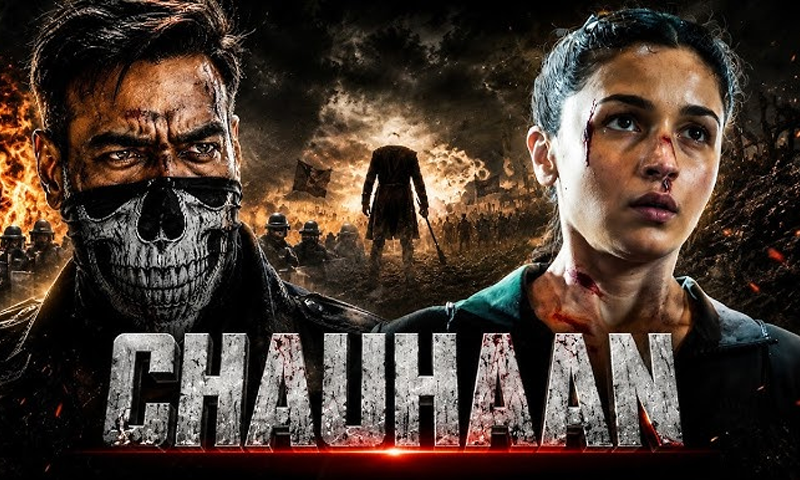
The teaser of the upcoming Bollywood film Chauhan has drawn strong criticism from pellet gun victims, human rights advocates and researchers in Indian-administered Kashmir, with critics arguing that the film misrepresents the impact of security operations and undermines the suffering of those injured during years of unrest.
Read More: Is Manushi making her Bollywood debut opposite Akshay Kumar
The controversy centers on a scene in which actor Ajay Devgn, portraying an Indian security officer, describes pellet guns as weapons that cause “limited harm.” Victims and rights campaigners say the portrayal ignores the lasting physical and psychological consequences faced by thousands of people affected by pellet gun injuries.
According to a report by Al Jazeera cited by Kashmir Media Service, several pellet gun survivors said the teaser revived painful memories of the violence witnessed during protests in the region. Among them are Feroz Aslam and Masroor Khalid, who lost their eyesight during demonstrations in Sopore in 2016. They said the film fails to reflect the reality experienced by victims and their families.
Pellet guns were introduced by Indian security forces in 2010 as a crowd-control measure. Their use increased significantly during protests that followed the killing of Burhan Wani in July 2016. Human rights organizations have repeatedly expressed concern over the injuries caused by pellet ammunition, including permanent eye damage and blindness.
Researchers and rights experts have also criticized the film’s narrative. Anthropologist Saiba Varma argued that such portrayals normalize state violence and reinforce negative stereotypes about Kashmiris. Similarly, Raqab Hameed Naik, head of the US-based Center for the Study of Organized Hate, said several Bollywood productions in recent years have reflected official narratives while overlooking allegations of human rights violations.
Read More: Six Bollywood tracks that will make your spirits soar
Kashmiri scholar and poet Ather Zia said Bollywood has long presented a one-sided depiction of Kashmir, often reducing local people to background characters or portraying them negatively.
The debate has renewed broader discussions about the representation of conflict, artistic responsibility and the experiences of civilians affected by violence in Kashmir.