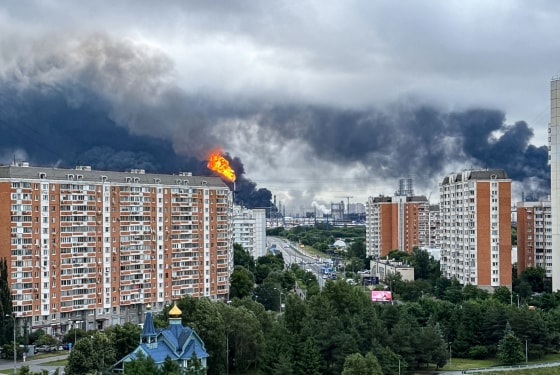
Ukraine launched one of its largest drone attacks on Moscow in recent years, targeting key energy infrastructure and setting an oil refinery ablaze as fighting between the two countries continued to intensify.
According to Russian officials, air defence systems intercepted hundreds of Ukrainian drones overnight, including many heading toward the Russian capital. Moscow Mayor Sergei Sobyanin said air defences repelled a large-scale attack but confirmed that several drones reached targets within the city.
One of the main targets was the Moscow oil refinery in the southeastern Kapotnya district. Videos circulating on social media showed flames and thick smoke rising from the facility following the strike. The refinery is considered strategically important, supplying a significant share of fuel and gasoline consumed in Moscow and surrounding areas.
Russian authorities also reported damage in other parts of the capital, including at a residential building and a fitness centre after drone debris fell in the area. Temporary flight disruptions were reported at Moscow airports as a precaution during the attack.
Ukrainian President Volodymyr Zelensky described the operation as a justified response to continued Russian strikes on Ukrainian cities and communities. Kyiv has increasingly targeted Russian energy infrastructure in recent months as part of its broader strategy to disrupt military logistics and economic resources supporting Moscow’s war effort.
Ukraine’s military also reported strikes on an oil depot in Russia’s Rostov region. Russian officials said multiple people were injured during the attacks, though the full extent of the damage is still being assessed.
In response, Russia launched a fresh wave of missile and drone attacks against Ukraine. Ukrainian authorities reported damage to residential property, energy infrastructure and industrial facilities in several regions.
The latest exchange highlights the growing use of long-range drones by both sides as the conflict enters another year, with attacks increasingly reaching deep into each country’s territory and affecting critical infrastructure far from the front lines.