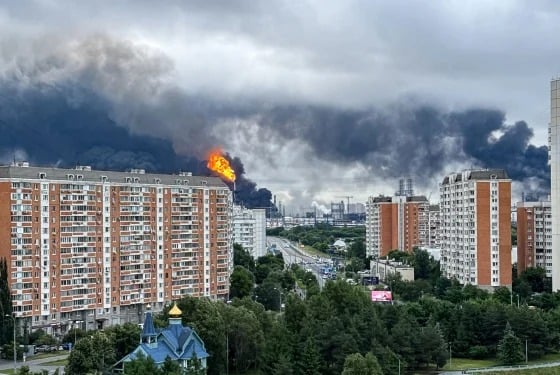
Ukraine carried out its biggest drone attack on Moscow since the start of the war, launching nearly 200 drones toward the Russian capital in a major escalation of long-range operations. The large-scale strike targeted key infrastructure and demonstrated Kyiv’s growing ability to hit strategic locations far beyond the front lines, increasing pressure on Russian defence systems.
Russian authorities said air defence units intercepted at least 194 Ukrainian drones over Moscow and nearby areas during the early hours of Thursday. The attack marked the third straight day of drone operations against the capital, highlighting a sustained campaign aimed at disrupting critical facilities and testing Russia’s ability to defend important urban and industrial centres.
Several drones reportedly struck the Moscow Refinery in Kapotnya, located on the south-eastern edge of the city. The facility is the largest oil refinery serving the Moscow metropolitan region and has faced repeated attacks in recent weeks. Thick smoke and visible flames rose above the area, drawing attention to the vulnerability of Russia’s energy infrastructure.
Meanwhile, local officials reported that at least 16 people suffered injuries during the attacks, including two children. Emergency teams responded to affected areas while authorities assessed damage caused by falling debris and drone impacts. The incident added to concerns about the increasing risks faced by civilians as the conflict expands beyond traditional battlefield zones.
More than four years after Russia launched its military campaign in Ukraine, the pace of Russian advances has slowed considerably in several sectors. At the same time, Ukraine has expanded its use of domestically produced long-range drones, allowing it to target military installations, energy facilities and logistical hubs located deep inside Russian territory.
Furthermore, the latest strike underscores how drone warfare is reshaping the conflict between the two countries. As both sides continue investing heavily in unmanned technologies, attacks on critical infrastructure are becoming more frequent, raising new security challenges and adding another complex dimension to an already prolonged war.