The Punjab government has unveiled a Rs5.903 trillion budget for the fiscal year 2026-27, placing strong emphasis on development, public welfare and improved service delivery across the province. The financial plan reflects a broad strategy aimed at expanding infrastructure, strengthening social sectors and ensuring that development benefits reach both urban and rural communities through targeted investments.
A major feature of the budget is the allocation of Rs752 billion for development projects, alongside Rs783 billion for service delivery, marking a 15 percent increase from the previous year. Furthermore, the government has earmarked Rs750 billion for education, Rs500 billion for healthcare and Rs91 billion for agriculture, highlighting its commitment to improving essential public services and supporting long-term economic growth.
The education sector has received substantial attention through scholarships for 80,000 students, distribution of 100,000 laptops and support for thousands of students through transport assistance programmes. In addition, nearly 300 Nawaz Sharif Schools of Eminence are planned across Punjab, with 128 already completed and another 178 schools scheduled for development during the next phase.
Meanwhile, the healthcare sector is set for further expansion with Rs100 billion allocated for the provision of free medicines in public hospitals. The government is also advancing major healthcare infrastructure projects, including the Nawaz Sharif Cancer Hospital in Lahore, the Nawaz Sharif Cardiology Hospital in Sargodha, a new cancer hospital in Dera Ghazi Khan and a Children’s Hospital in Bahawalpur.
The budget also focuses heavily on agriculture, security and public services. More than 21,000 Green Tractors have already been distributed among farmers, while additional support schemes include Kissan Cards, solarisation projects and modern farming equipment. At the same time, Rs252 billion has been allocated for Punjab Police, while the Suthra Punjab Programme has received Rs150 billion and continues to generate significant employment opportunities.
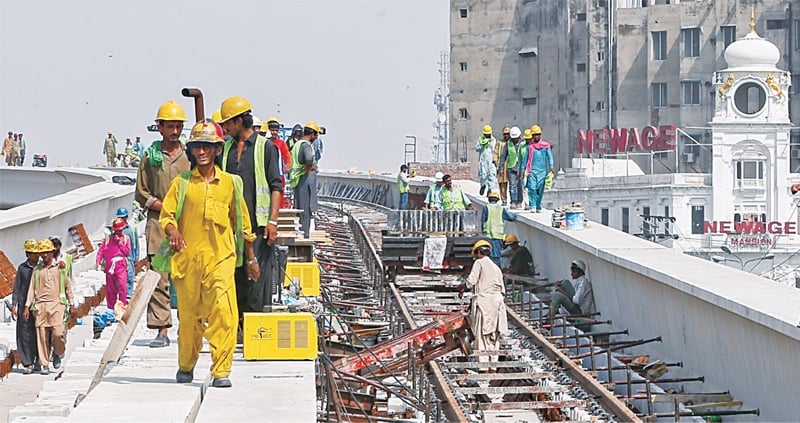
Transportation, environmental protection and heritage conservation have also secured major funding under the new budget. Electric bus services are expanding across multiple districts, while mass transit projects in Gujranwala and Faisalabad continue to advance. Additionally, the government has allocated funds for climate initiatives, tourism development, heritage restoration and urban improvement projects, reinforcing its broader vision of sustainable growth and modernization across Punjab.