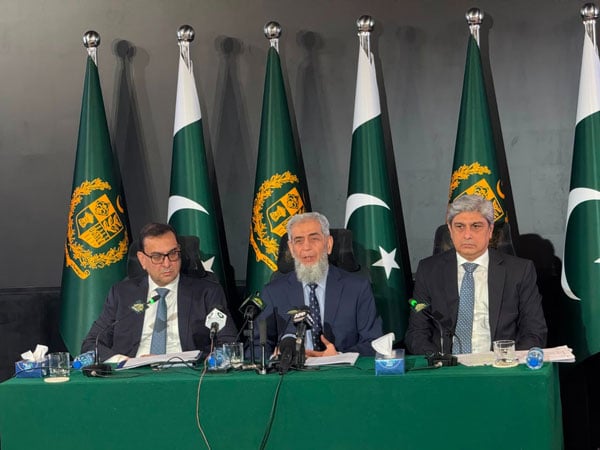
 Pakistan has initiated sweeping reforms in its maritime sector aimed at boosting trade efficiency, improving port performance, and reviving the shipping industry, senior officials said on Thursday.
Co-Chairman of the Maritime Task Force, Iftikhar Ahmad Rao, underscored the strategic importance of the sector, noting that nearly 90 percent of Pakistan’s trade is conducted via sea routes. He emphasized that Pakistan’s geographic position at the mouth of the Gulf, along with its connectivity to China through the China-Pakistan Economic Corridor (CPEC) and access to Central Asia, provides it with a unique economic advantage.
Despite its significance, Rao acknowledged that the maritime sector had long suffered from weak coordination among stakeholders. To address this, the government established the Maritime Task Force in August 2024 to streamline operations and enhance institutional collaboration.
Since its inception, the task force has engaged extensively with key stakeholders, including port authorities, shipping agents, ship breaking yards, and chambers of commerce. The body has also been regularly briefing the prime minister on progress. In its most recent review, the task force outlined 99 reform measures, with implementation already underway on 84 of them.
Officials reported significant improvements in port operations as a result of these reforms. Bottlenecks at terminals have been resolved, customs staffing levels increased, and scanning systems upgraded. These measures have contributed to a marked improvement in port rankings. Karachi Port Trust has climbed significantly, while Port Qasim has improved by 18 positions and is now ranked among the top five fastest-improving ports globally.
The country’s shipbuilding capacity is also showing encouraging signs. Karachi Shipyard has begun constructing container ships domestically at costs several million dollars lower than international prices, while continuing work on submarines and other vessels.
Rao highlighted that Pakistan’s private shipping sector, once active, declined following nationalization in the 1970s. Although the national shipping corporation is now profitable, the government is keen to attract private investment back into the sector. He noted that high taxation had previously discouraged investors, pushing them toward offshore jurisdictions such as Dubai and Panama. In a major policy shift, the government has now abolished sales tax on ship purchases in the latest budget to incentivize growth.
Pakistan has also taken steps to align with international standards by joining the Hong Kong International Convention for the Safe and Environmentally Sound Recycling of Ships. Efforts are underway in collaboration with the Balochistan government to modernize the ship-breaking industry.
Federal Board of Revenue (FBR) Customs Member Shakeel Shah said regulatory gaps have been addressed, including the introduction of rules for refueling ships, enabling larger vessels to dock at Pakistani ports. He added that improvements in customs systems have enhanced cargo handling capacity, with notable increases in imports across sectors such as electronics, cosmetics, textiles, and automobiles.
A key reform has been the digitization of customs procedures through the Pakistan Single Window system, which integrates all stakeholders onto a unified digital platform. This has reduced delays, minimized physical inspections, and facilitated faster clearance of goods. Under the new system, containers are scanned instead of being manually opened, except in cases flagged by risk based digital controls.
The Ministry of Maritime Affairs confirmed that third party performance audits have played a role in improving efficiency and transparency, contributing to Pakistan’s improved standing in international rankings. Cargo handling at Karachi Port has reached 8.55 million tons, while Port Qasim has also recorded substantial growth.
A comprehensive Pakistan Shipping Policy, developed through broad consultation, has been finalized and is expected to receive federal cabinet approval within the current month. The reforms also address long standing issues in coastal shipping, allowing conditional entry of foreign vessels, with supporting legislation underway at both provincial and federal levels.
Rao stressed that Gwadar Port remains central to Pakistan’s long term maritime strategy. While Gwadar is a natural deep sea port, he noted that its full potential can only be realized through the development of Special Economic Zones (SEZs). Drawing comparisons with Dubai’s Jebel Ali Port, he said economic zones are critical to driving port led growth.
He further emphasized the need for a unified national port strategy, arguing that even the optimization of a single shipping company could generate revenues comparable to the country’s national budget. He cited Japan, China, and South Korea as examples of countries that achieved economic transformation through robust shipbuilding industries.