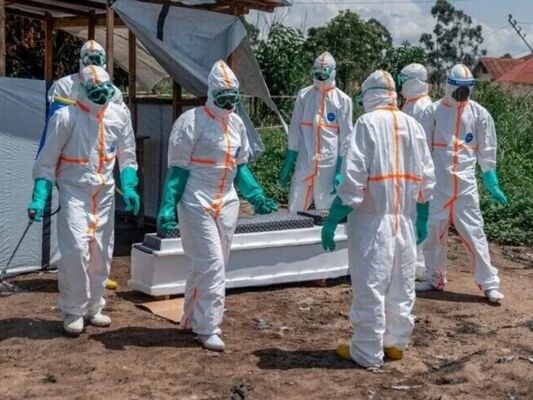
The Democratic Republic of the Congo’s Ebola outbreak has surpassed 1,800 confirmed cases after the virus spread to a fourth province. Health authorities reported 1,830 infections and 648 deaths since the outbreak was declared on May 15. The expanding outbreak has increased concerns for affected communities and regional public health authorities.
According to the Congolese Health Ministry, 780 patients are currently receiving treatment, while 284 people have recovered from the disease. The outbreak has primarily affected Ituri, North Kivu, and South Kivu provinces. However, authorities confirmed on Friday that Ebola has now spread to Haut-Uele province after seven fatal cases were detected in the Wamba health zone.
Read more: Uganda confirms new Ebola cases linked to DR Congo
Health officials said response efforts have been strengthened through improved national coordination, epidemiological surveillance, and community mobilisation in the affected provinces. Meanwhile, international donors and development partners have pledged $910 million to support Ebola response efforts in both the Democratic Republic of the Congo and neighbouring Uganda, where 20 confirmed cases have also been reported.
The Africa Centres for Disease Control and Prevention (Africa CDC) said it has deployed multidisciplinary expert teams to priority health zones accounting for 83 percent of reported cases. Africa CDC Director General Jean Kaseya stressed that rapid detection, strong surveillance systems, trusted community health workers, and timely financing remain essential to containing the outbreak before it spreads further.
Read more: Pakistan tightens airport monitoring amid Ebola surge in Africa
The World Health Organization declared the Ebola outbreak caused by the Bundibugyo strain a Public Health Emergency of International Concern on May 17, two days after the outbreak was officially announced. Health authorities continue to monitor the situation closely while urging sustained international support to contain the virus and prevent additional infections.