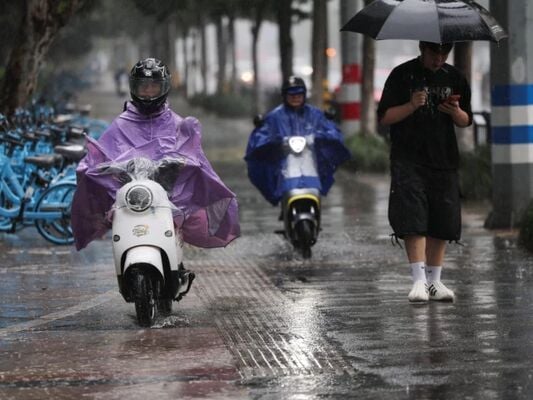
China evacuated more than 600,000 people on Saturday as Typhoon Bavi approached the eastern city of Wenzhou after battering Japan’s southern islands and passing near northern Taiwan. Authorities warned that the storm still poses a major threat despite weakening over cooler waters. The massive evacuation aims to protect millions of residents from heavy rain, flooding, and powerful winds.
State media reported that more than 500,000 people were evacuated from Zhejiang province, where Wenzhou is located, while over 100,000 residents left vulnerable areas in neighbouring Fujian province. Forecasters expect Typhoon Bavi to make landfall near Wenzhou, a city of around 10 million people, during the early hours of Sunday. Officials said the storm remains dangerous because of the enormous volume of moisture carried within its rain bands.
Read more: China, Taiwan brace for Typhoon Bavi
Residents rushed to complete final preparations before the storm arrived, with many purchasing food, drinking water, and other essential supplies. Local authorities also closed markets and activated emergency response measures across affected areas. Officials urged the public to avoid unnecessary travel and follow evacuation instructions.
Taiwan avoided a direct landfall but evacuated more than 14,000 people from high-risk mountainous regions as a precaution. Authorities cancelled 920 international flights and all 282 domestic flights while most cities declared a typhoon holiday. Although no fatalities were reported in Taiwan or Japan, Taiwan’s fire department said at least 87 people suffered mostly minor injuries during the storm.
Read more: US, Arab states back Hormuz security
Meanwhile, the Philippines reported 17 deaths linked to heavy rainfall caused by an enhanced southwest monsoon intensified by Typhoon Bavi. Emergency services across East Asia remain on high alert as the storm continues moving toward China’s eastern coast. Authorities have warned that flooding, landslides, and strong winds could continue even after the typhoon weakens.