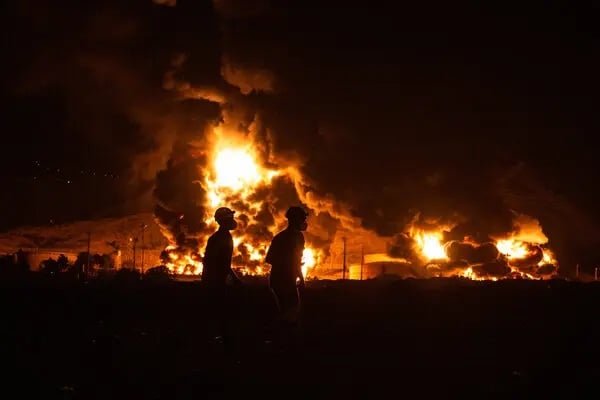
The conflict between the United States and Iran intensified on Saturday as both countries exchanged fresh attacks for a seventh consecutive night, further escalating tensions after the collapse of a fragile ceasefire agreement.
Read More: US pressure stalls Hormuz agreement: Iran
According to US Central Command, American forces carried out strikes on Iranian military targets, including surveillance sites, logistics infrastructure, underground weapons storage facilities and maritime assets. The operation involved fighter aircraft, drones and naval vessels.
The US military said more than 50,000 American personnel remain deployed across the Middle East and are prepared for further operations if required.
Iran responded by launching attacks targeting US allies in the Gulf region, including facilities in Kuwait and Jordan. Iranian media reported that missile strikes hit power infrastructure and desalination facilities in the southern city of Jask, disrupting drinking water supplies to nearby communities.
The confrontation has also expanded to maritime routes in the Strait of Hormuz, a strategic waterway through which roughly one-fifth of the world’s oil supply passes. Washington said it had intercepted and redirected several commercial vessels while enforcing a naval blockade, whereas Iran’s Revolutionary Guards claimed they stopped ships that violated its navigation rules.
Iranian state media also reported that two oil tankers caught fire after travelling through a mined route south of the strait, a claim the US military rejected as false.
The United Nations voiced concern over the growing attacks on civilian infrastructure across the region. UN Secretary-General António Guterres urged restraint as reports emerged of damage to bridges, roads and public utilities in southern Iran.
The continued fighting has also affected global energy markets, with oil prices rising more than four per cent to their highest level in over a month amid fears of prolonged supply disruptions.
Read More: Iran pushes for comprehensive US deal amid Gulf tensions
The latest escalation follows the breakdown of ceasefire efforts, raising international concerns that the conflict could widen further and threaten regional security and global trade.