• Skip to primary navigation
  • Skip to main content
  • Skip to primary sidebar
  • Skip to footer
Trending:
  • Kashmir
  • Elections
Monday, June 8, 2026

Daily Times

Your right to know

  • HOME
  • Latest
  • Iran-Israel war
  • Gilgit Baltistan Election
  • Pakistan
    • Balochistan
    • Gilgit Baltistan
    • Khyber Pakhtunkhwa
    • Punjab
    • Sindh
  • World
  • Editorials & Opinions
    • Editorials
    • Op-Eds
    • Commentary / Insight
    • Perspectives
    • Cartoons
    • Letters to the Editor
    • Featured
    • Blogs
      • Pakistan
      • World
      • Lifestyle
      • Culture
      • Sports
  • Business
  • Sports
  • E-PAPER
    • Lahore
    • Islamabad
    • Karachi

Govt drafting new auto policy to align with IMF-backed tariff reforms

Published on: November 9, 2025 10:07 AM

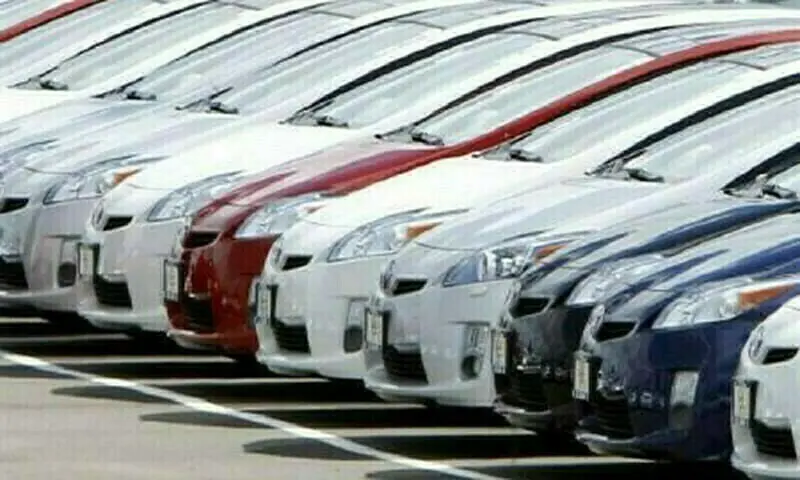
A file photo of a row of auto vehicles. — Reuters/File
KARACHI: As Pakistan’s existing auto policy approaches its expiry in June 2026, the government is finalising the Auto Industry Policy 2026–31, aimed at creating a more open and competitive automotive market. The Engineering Development Board (EDB) is leading consultations with vehicle assemblers, parts manufacturers, and importers of used vehicles to shape the new framework.

Officials said the upcoming policy will be aligned with the National Tariff Policy (NTP), introduced under Pakistan’s $7 billion IMF Extended Fund Facility, which caps tariff rates on finished goods at 15 percent and seeks the elimination of concessionary SROs. The new policy marks a decisive shift toward market-driven reforms in a sector long dominated by tariff protection and restricted imports.

Read More: BMP concerned over IMF–backed Customs tariff cut to hit industry

At the same time, the government has permitted the commercial import of used vehicles, while maintaining baggage and gift schemes for overseas Pakistanis — mechanisms that local assemblers claim are being exploited by traders for commercial gains. The growing influx of undervalued used cars has heightened competition for local assemblers, pushing them to demand lower taxes and a fairer playing field.

Industry insiders report a growing rift between automakers and parts manufacturers. Most local assemblers — representing over a dozen global brands — are advocating for lower duties on CKD kits and localised parts, capped at 10 percent, and the removal of taxes on safety components. They argue that over half of a vehicle’s price comprises government duties and taxes, making affordability impossible without tariff rationalisation. In contrast, some Japanese assemblers and parts vendors are lobbying to retain high protectionist tariffs of up to 35 percent, a stance policymakers view as outdated and counterproductive.

Read More: SAPM, car dealer discuss auto policy 2026 

Government officials have made clear that long-term protection is unsustainable. They have asked established assemblers to justify decades of tariff support amid minimal exports, limited innovation, and outdated vehicle models. Despite localisation claims exceeding 60 percent for several models, Pakistan’s auto exports have remained negligible over the past five years.

New entrants, particularly from China and South Korea, have disrupted the market by launching hybrid and plug-in hybrid models with enhanced safety standards and competitive pricing. Analysts say the upcoming policy will aim to improve competitiveness, expand exports, and reduce consumer costs, steering the sector away from protectionism toward performance-based growth.

Filed Under: Business Tagged With: auto policy, car industry, EDB, IMF reforms, Latest, localisation, Pakistan economy, vehicle imports

Submit a Comment


Primary Sidebar


Latest News

PFF president hails national men’s team for ending 64-year wait

Maryam Nawaz unveils major Lahore urban renewal project

UoR earns NTC thumbs-up, sets new benchmarks in technology education

US weighs Iranian assets plan as Gulf tensions rise

Punjab shifts to digital land ownership system from July

Pakistan

Maryam Nawaz unveils major Lahore urban renewal project

UoR earns NTC thumbs-up, sets new benchmarks in technology education

Punjab shifts to digital land ownership system from July

Bilawal calls urgent PPP meeting over AJK tensions

Punjab launches QR panic button system for transport safety upgrade

More Posts from this Category

Business

Pakistan savings rate hits 30-year low raising economic concerns

PSX new IPOs deliver 47% average return, boosting investor confidence

Pakistan signs MoU with Saudi, local firms to develop Karachi maritime business district

Gold prices witness sharp decline

Gul Ahmed venture QGDC announces $230m investment to set up Pakistan’s largest data centre

More Posts from this Category

World

US weighs Iranian assets plan as Gulf tensions rise

King Charles signals unity as royals gather at wedding

Pakistan tells un Kashmir dispute remains unresolved integral issue

More Posts from this Category


Footer

Home
Lead Stories
Latest News
Editor’s Picks

Culture
Life & Style
Featured
Videos

Editorials
OP-EDS
Commentary
Advertise

Cartoons
Letters
Blogs
Privacy Policy

Contact
Company’s Financials
Investor Information
Terms & Conditions

Facebook
Twitter
Instagram
Youtube

© 2026 Daily Times. All rights reserved.

We use cookies to ensure that we give you the best experience on our website. If you continue to use this site we will assume that you are happy with it.