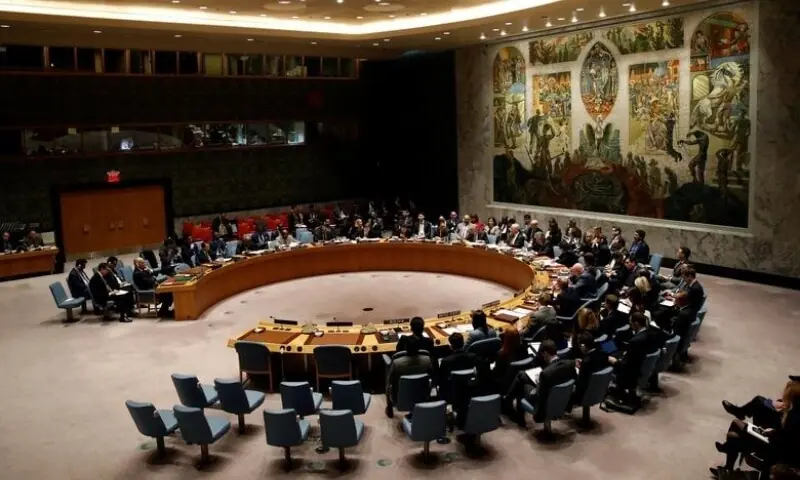
The UN Security Council has strongly condemned the suicide bombing at a Shia imambargah in Islamabad, describing the attack as “heinous and cowardly” and expressing shock that worshippers were targeted inside a place of prayer.
Read More: Death toll from Islamabad suicide blast climbs to 35
The February 6 attack struck Imambargah Qasr-i-Khadijatul Kubra on the outskirts of the capital during Friday prayers, killing at least 38 people and injuring more than 150, officials said. Many of the wounded were taken to nearby hospitals in critical condition.
Pakistan: @antonioguterres condemns Friday’s attack on worshippers gathered at a mosque in Islamabad in the strongest terms.
He reaffirms the UN’s solidarity with Pakistani efforts to combat terrorism & violent extremism.https://t.co/e6pkF1Yytd pic.twitter.com/4dRdSmpVTZ
— United Nations (@UN) February 6, 2026
In a statement, UNSC President James Kariuki said council members condemned the bombing “in the strongest terms,” highlighting the senseless violence against civilians gathered for worship. The council conveyed “deepest sympathy and condolences to the families of the victims and to the government and the people of Pakistan,” and wished a full recovery to those injured.
Reaffirming its long-standing stance, the UNSC said terrorism in all its forms remains one of the gravest threats to international peace and security. Members stressed the importance of accountability, calling for perpetrators, organisers, financiers and sponsors of the attack to be brought to justice.
The council also urged all states to cooperate actively with Pakistan in line with international law and relevant UN resolutions to combat terrorism and support investigations.
Earlier, Antonio Guterres, Secretary-General of the United Nations, had likewise condemned the bombing. His spokesperson said attacks against civilians and places of worship are unacceptable and reiterated that those responsible must be identified and prosecuted.
Read More: Senate resolution reaffirms support for Kashmiris
The Islamabad attack has drawn widespread international condemnation and renewed concerns about the security of religious sites in Pakistan, where sectarian and militant violence has periodically targeted minority communities and places of worship.