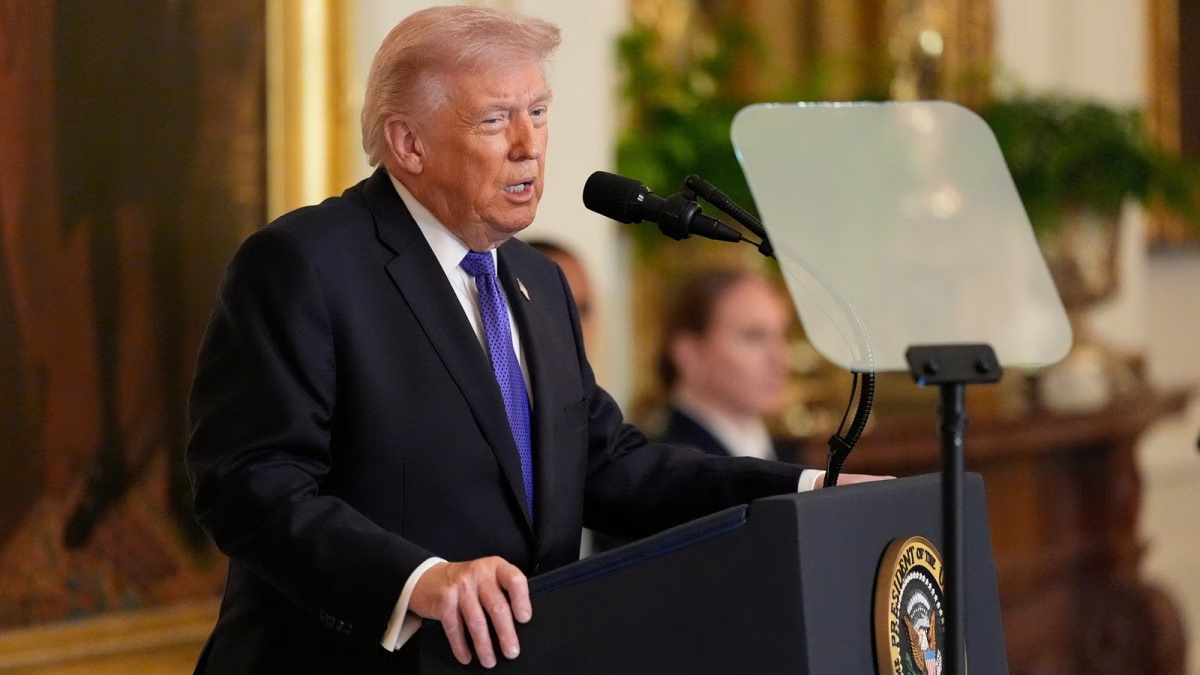
U.S. President Donald Trump said he is not interested in negotiations with Iran and suggested the war may continue until Tehran loses its military strength and leadership capacity. Speaking to reporters aboard Air Force One, he argued that an ongoing air campaign could render talks meaningless if Iran’s command structure is destroyed. He added that at some point there may be no one left to formally declare surrender.
Meanwhile, intense fighting continued as Israel and Iran exchanged strikes for a second week under the expanding conflict involving the United States. Iran’s President Masoud Pezeshkian apologized to neighboring countries affected by Iranian attacks on U.S. facilities and urged them not to join the campaign. However, he dismissed Trump’s demand for unconditional surrender and stated that Iran would suspend attacks on nearby states unless they host strikes against it.
Read more : Trump demands Iran surrender as Tehran refuses, tensions escalate …
At the same time, Israeli Prime Minister Benjamin Netanyahu warned that members of the Islamic Revolutionary Guard Corps who lay down their arms would not face harm. Inside Iran, officials rejected claims of division, with senior security figures insisting that national unity remains intact during the conflict. Additionally, the judiciary leadership said retaliatory operations would continue if regional territories are used for attacks.
The war also spread beyond the core battlefield, raising regional tensions. Reports confirmed an explosion near the U.S. embassy in Oslo, causing minor damage but no injuries, while authorities investigated the cause. Furthermore, Saudi Arabia warned Tehran that continued attacks could trigger a response, and officials reported intercepting drone threats near Riyadh’s diplomatic area.
Read more : Trump claims US strikes on Iran a global “service”
Military activity expanded across the Gulf, with claims of drone strikes and explosions near several bases hosting U.S. forces, including areas around the Abu Dhabi and installations in Bahrain. Meanwhile, Israel intensified operations in Lebanon, issuing warnings to Hezbollah and conducting heavy airstrikes in southern Beirut, which caused significant destruction and rising casualties.
The conflict has sharply increased global instability, driving energy prices higher and disrupting international trade routes, including pressure on the Strait of Hormuz. According to official statements, thousands of casualties have been reported on all sides, while oil production cuts in parts of the Gulf further strained markets. As tensions grow, calls have emerged inside Iran for swift leadership decisions amid continued escalation.