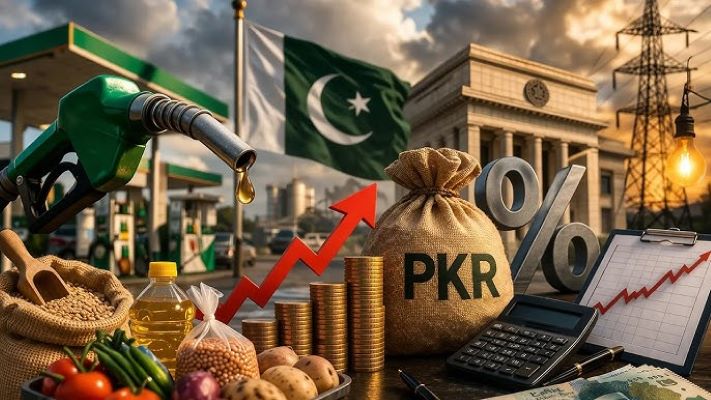
Pakistan faces rising inflation risks following record increases in petrol and diesel prices, with analysts warning CPI could exceed 15%. Higher fuel and energy costs are driving the surge, affecting households, businesses, and overall economic stability. The spike could also trigger monetary tightening as the central bank considers raising policy rates.
Consumer Price Index (CPI) inflation reached 7.3% year-on-year in March 2026, up from 7% in February, while the Sensitive Price Index (SPI) rose 1.01% in the week ending April 2. Liquefied Petroleum Gas (LPG) prices surged 13.28%, according to data from the Pakistan Bureau of Statistics. Analysts say energy costs are the primary driver of the accelerating inflation trend.
Read more: Pakistan inflation hits 19-month high
Ali Khizar Aslam, Director Research at Business Recorder, projected inflation to reach 13% in April and exceed 15% in May and June. He warned that the central bank may raise interest rates by 1–2% in the next monetary policy review to contain price pressures. Currency pressures may also intensify, with the rupee projected to depreciate 5–7% against the US dollar by mid-year.
The government’s recent fuel price hikes are significant, with diesel rising 55% and petrol 43%. In response, Prime Minister Shehbaz Sharif announced a temporary Rs80 per litre reduction in the petroleum levy for one month, providing partial relief to consumers. Energy shortages and RLNG supply constraints from Qatar could further raise electricity costs and trigger intermittent load shedding, particularly in Punjab.
Read more: Headline inflation recorded at 7.3% in March
Last month, the central bank kept its benchmark policy rate at 10.5% amid geopolitical tensions in the Middle East and rising global energy prices. Analysts say sustained fuel price increases, coupled with potential electricity challenges, could worsen inflation, prompting further monetary tightening and affecting Pakistan’s economic outlook.