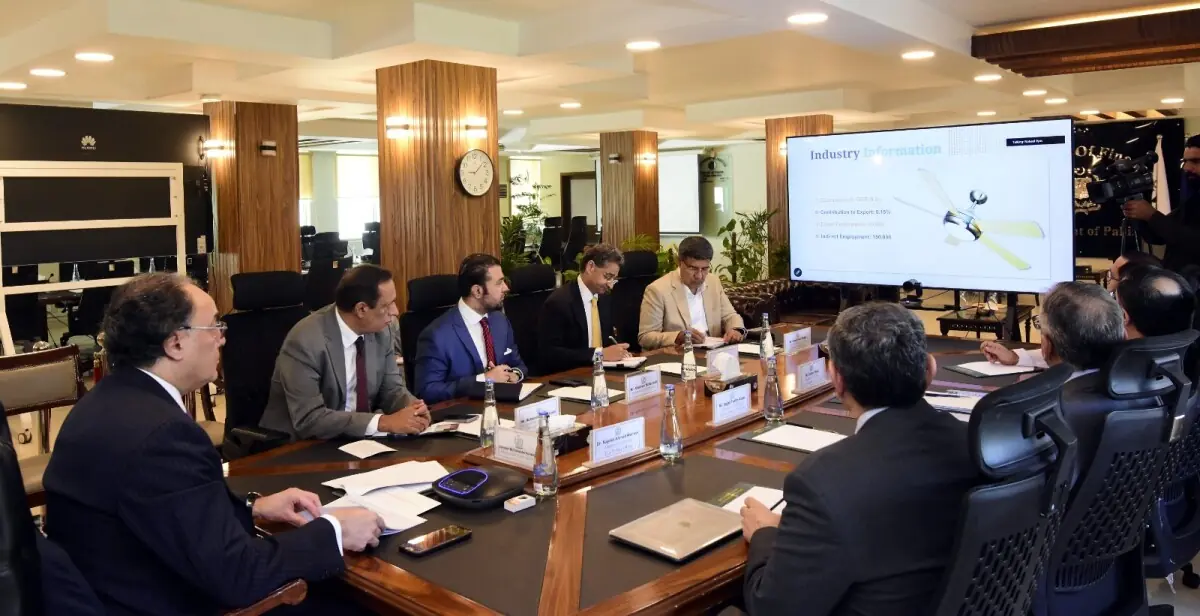
Representatives of Pakistan’s electric fan industry have called for targeted policy interventions to strengthen exports, improve value addition, and promote energy-efficient technologies during a meeting with Finance Minister Muhammad Aurangzeb.
Read More: Electric fan industry seeks policy support to boost exports
The discussion, held in Islamabad, brought together stakeholders from the Federation of Pakistan Chambers of Commerce and Industry and the Pakistan Electric Fan Manufacturers Association. Industry representatives highlighted key challenges, export potential, and the need for policy support to sustain growth.
Finance Minister Holds Virtual Meeting with Electric Fan Industry; Discusses Exports, Financing, and Energy Efficiency Initiatives
Federal Minister for Finance and Revenue Senator Muhammad Aurangzeb today held a virtual meeting with a group of representatives from the electric… pic.twitter.com/EPEpjWZItp
— Ministry of Finance, Government of Pakistan (@Financegovpk) April 6, 2026
Participants urged the government to limit exports of raw materials such as copper and aluminium, arguing that excessive outflows reduce opportunities for domestic value-added manufacturing. They stressed the importance of a balanced policy that encourages processing within the country to enhance export quality and competitiveness.
The fan industry, described as a fully indigenous manufacturing sector, consists of around 300 manufacturers primarily based in Gujrat and Gujranwala. It provides employment to approximately 40,000 people directly and over 150,000 indirectly, while maintaining a strong export presence in markets across the Middle East and Africa.
A significant portion of the discussion focused on transitioning to energy-efficient DC (direct current) fan technology. Industry representatives expressed readiness to support large-scale replacement of conventional fans, which could help reduce electricity consumption nationwide.
Access to financing for expanding production capacity was also highlighted as a critical need, particularly to meet anticipated demand under energy-efficiency initiatives. The finance minister acknowledged these concerns and assured participants that existing financing frameworks would be reviewed to better align with industry requirements.
Read More: Pakistan reviews fuel pricing system amid uncertainty
Aurangzeb reiterated the government’s commitment to sector-specific consultations and emphasised ongoing reforms aimed at reducing input costs, improving liquidity for SMEs, and enhancing the overall business environment.