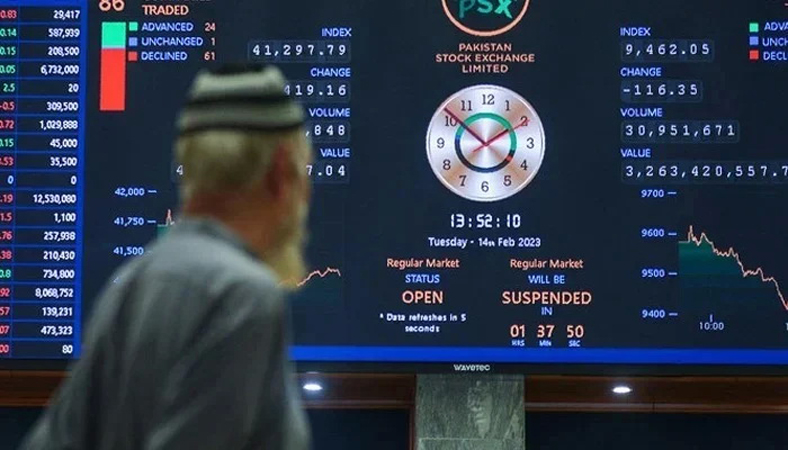
Pakistan’s benchmark stock index, the KSE-100 Index, dropped below the 170,000 level on Thursday as bearish sentiment continued to dominate trading at the Pakistan Stock Exchange (PSX).
Read More: PSX turns bearish, loses over 1,576 points
During intraday trading, the index plunged by more than 2,700 points, falling to 168,828.24 compared to the previous close of 171,579.30. The sharp decline reflects heightened investor caution amid ongoing geopolitical and economic uncertainty.
Market analysts attribute the downturn largely to developments in the Middle East, particularly uncertainty surrounding potential talks between the United States and Iran. Rising tensions and stalled diplomatic efforts have contributed to volatility in global oil markets, directly impacting investor sentiment in Pakistan.
A recent increase in oil prices has added to concerns, as higher energy costs can widen Pakistan’s import bill and place additional pressure on the economy. Investors have remained cautious, reacting swiftly to international developments that could influence domestic financial stability.
The market had already shown signs of nervousness in the previous session, fluctuating throughout the day before closing in negative territory. Analysts noted that the index’s continued decline reflects a fragile environment where sentiment is heavily influenced by external factors.
Experts suggest that the near-term outlook for the market will remain uncertain and largely driven by geopolitical headlines. Any progress in diplomatic engagements could help restore investor confidence, while further delays or escalation may intensify volatility.
Despite the current pressure, some analysts believe that underlying fundamentals could provide support if stability returns to global markets. For now, however, investors are expected to remain cautious as they monitor developments closely.
Read More: PSX falls over 500 points at midday
The latest drop highlights the sensitivity of Pakistan’s stock market to global events, particularly those affecting energy prices and regional stability.