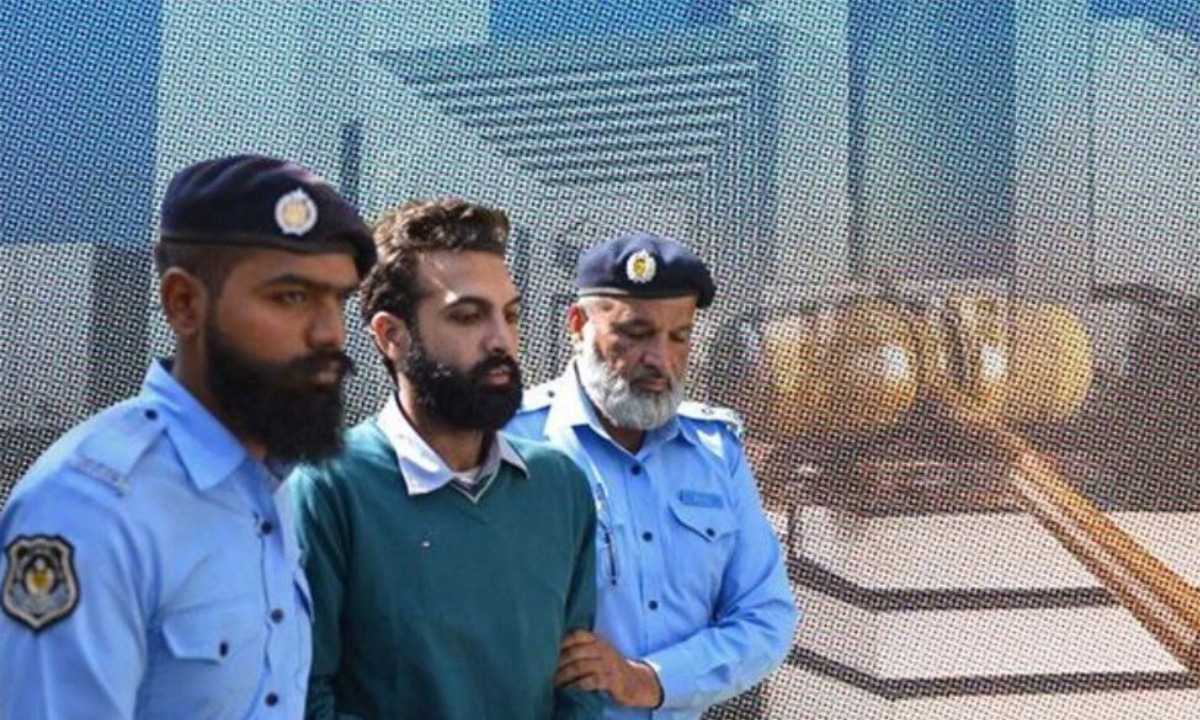
The Supreme Court has dismissed Zahir Jaffer’s review petition in the Noor Mukadam murder case, upholding his death sentence and bringing another major legal chapter to a close. A three-member bench led by Justice Hashim Kakar delivered the unanimous verdict after hearing detailed arguments from both sides during proceedings that lasted several hours.
During the hearing, the defence focused primarily on Jaffer’s mental health, arguing that he was suffering from serious psychiatric conditions at the time of the crime and trial. His lawyer maintained that medical records showed treatment for bipolar disorder, schizophrenia and depression, and requested consideration of these factors in relation to the sentence.
Read more : FCC rules high courts operate independently of Supreme Court
However, the bench questioned the evidence presented regarding the convict’s medical history and asked for proof showing when treatment began and whether it was ongoing at the time of the incident. The judges also noted that a request for the formation of a medical board had already been rejected during earlier proceedings and was not successfully challenged before higher courts.
The defence further argued that authorities did not conduct a drug test on the convict and claimed public pressure may have influenced aspects of the investigation. Nevertheless, Justice Hashim Kakar firmly rejected the suggestion that courts make decisions under media or social media influence, emphasizing that judicial rulings are based solely on evidence and law.
Read more : SCP issues new Supreme Court Rules 2025
Moreover, the court observed that even if questions regarding mental health were considered, the defence had not clearly established grounds that would justify altering the punishment. While the lawyer cited previous cases in which courts examined merits during review proceedings, he clarified that he was seeking a reduction in sentence rather than a retrial.
Following the verdict, Noor Mukadam’s father, Shaukat Mukadam, welcomed the decision and reiterated his commitment to seeking justice for women facing violence across Pakistan. He revealed that he had received a settlement offer through an intermediary but refused any compromise, stressing that the case represents a broader struggle against violence and injustice