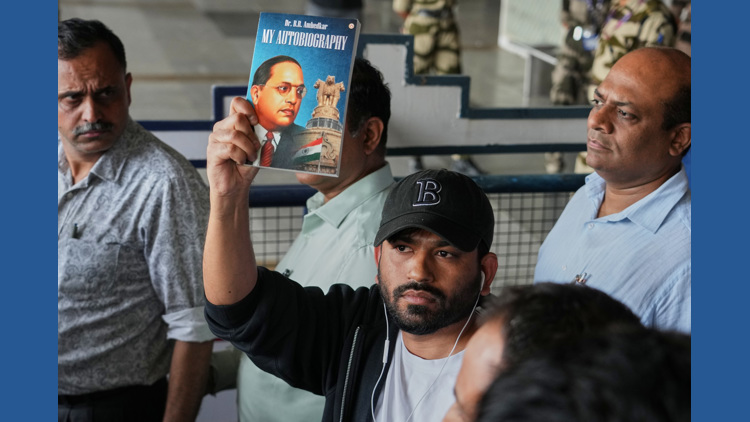
The founder of India’s rapidly growing Cockroach Janta Party arrived in New Delhi on Saturday to lead a protest against Prime Minister Narendra Modi’s government, marking the movement’s first major demonstration on the streets after gaining millions of followers online.
Read More: Satirical ‘Cockroach Party‘ plans protest in New Delhi
Abhijeet Dipke, a 30-year-old activist who has been living in the United States for the past two years, returned to India to participate in the protest. Ahead of his arrival, Dipke had said that family members and friends were concerned he could face arrest because of his political activities.
“Education Minister must resign. Five students have committed suicide.”. : Abhijit Dipke #cocroachjantaparty #AbhijeetDipke @CJP_for_India @CJP_2029 @Cockroachisback @Cockroach4India #Delhipolice #Delhiigiairport #Breaking #protest https://t.co/i3kKHowWhT pic.twitter.com/E5CtMpjHuO
— Journalist Ravendra kumar (@Chhotukingoffi1) June 6, 2026
The demonstration took place near Jantar Mantar in central New Delhi, a site often used for public protests. Dozens of police officers were deployed in the area, while some surrounding roads were barricaded as protesters gathered and chanted slogans demanding the resignation of Education Minister Dharmendra Pradhan.
The Cockroach Janta Party has emerged as one of the most prominent online movements critical of the government. Since its launch in May, the group has attracted around 22 million followers on Instagram, largely drawing support from young Indians frustrated by unemployment and repeated examination paper leaks.
The movement has also faced official scrutiny. Authorities blocked its X account in India, a decision the group has challenged in court. Senior government minister Kiren Rijiju has accused the organisation of seeking support from Pakistan and elements he described as anti-India.
Movement spokesperson Ashutosh Ranka described the campaign as a peaceful initiative focused on issues affecting young people. He said Dipke was prepared for a significant day in Indian politics and remained committed to highlighting youth concerns.
Read More: Indian online movement alleges social media crackdown
India is home to nearly 400 million people between the ages of 15 and 29. Despite strong economic growth, creating sufficient employment opportunities for young people remains a major challenge. Economists note that many educated youths continue to face unemployment or work in low-paying jobs that do not match their qualifications, fuelling growing dissatisfaction among sections of the population.