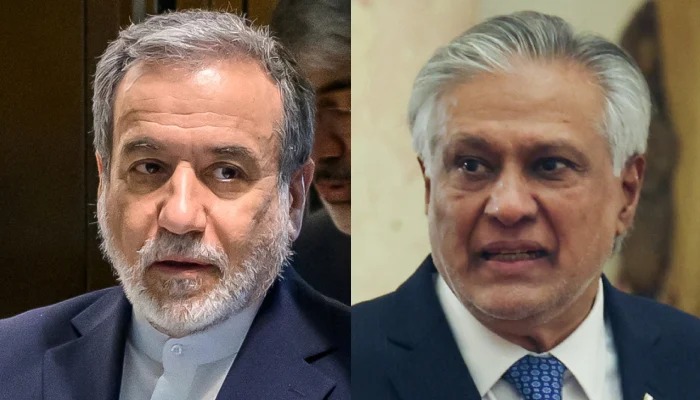
Deputy Prime Minister and Foreign Minister Ishaq Dar told Iranian Foreign Minister Abbas Araghchi that dialogue and diplomacy remain the only effective way to resolve disputes and achieve lasting regional peace during a telephone conversation on Sunday. Both leaders reviewed the rapidly changing security situation and stressed the importance of reducing tensions through peaceful engagement instead of further military confrontation.
Read more : Iran warns it won’t be bound by deal if US violations continue
Moreover, Dar urged all parties to exercise restraint and support de-escalation in line with the Islamabad Memorandum of Understanding reached in June. He reaffirmed Pakistan’s commitment to promoting peace and stability across the region and reiterated the country’s willingness to play a constructive role in encouraging diplomatic solutions to the ongoing crisis. Both foreign ministers also agreed to remain in close contact as developments continue.
Meanwhile, regional tensions have intensified following heavy exchanges of missile and drone attacks between Iran and the United States. Iran claimed responsibility for strikes targeting US military facilities in several Gulf countries after announcing another closure of the Strait of Hormuz, further increasing concerns over security and stability in one of the world’s most strategic waterways.
Read more : Iran buried Ali Khamenei as Gulf tensions rise again –
Furthermore, the latest escalation followed attacks on commercial vessels operating near the Strait of Hormuz. Iranian officials said they closed the vital shipping route after warning shots struck a vessel travelling on an unapproved route and later claimed to have disabled another ship. Tehran also declared that the waterway would remain closed until what it described as the end of US interference in the region.
The closure of the Strait of Hormuz has raised serious concerns because nearly one-fifth of the world’s oil supply normally passes through the narrow passage. The disruption has already pushed global energy prices higher, adding pressure on international markets and increasing inflation risks. At the same time, Iranian officials continued to accuse the United States of violating previous understandings, insisting that lasting peace depends on mutual compliance with agreed commitments.