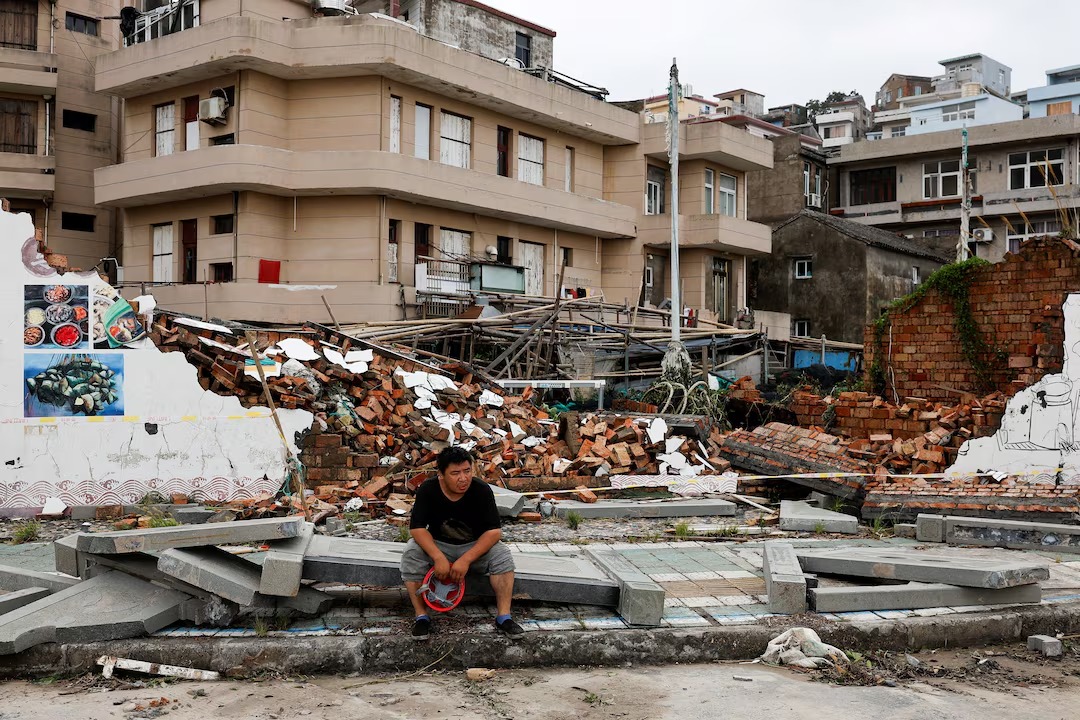
Typhoon Bavi, the strongest storm to strike mainland China this year, battered the country’s eastern coastline with powerful winds and heavy rainfall before weakening into a tropical storm after moving inland. Despite losing strength, weather officials warned that the massive system could continue bringing prolonged and intense rainfall across eastern and northern China, increasing the threat of floods, landslides and widespread damage over the coming days.
Read more : China evacuates 600,000 as Typhoon Bavi nears
Moreover, authorities evacuated nearly two million residents before the storm made landfall, with most evacuations taking place in Zhejiang province. Bavi first struck the coastal city of Yuhuan late Saturday before making a second landfall in Yueqing shortly after midnight. Residents described violent winds that tore down roof tiles and tree branches, while rising floodwaters submerged roads, canals and surrounding neighbourhoods.
Meanwhile, emergency teams launched large-scale rescue and recovery operations as heavy rain triggered flooding and landslides across several affected areas. More than 1,300 trees fell in Yueqing, including over 700 that were completely uprooted, while excavators and chainsaws cleared blocked roads. In the mountainous north of the city, landslides sent massive rocks onto roads as swollen rivers overflowed and submerged nearby vegetation.
Read more : China submarine missile test raises Indo-Pacific security concerns
The storm also caused major transport disruptions across China and Taiwan, affecting thousands of travellers. In Taiwan, heavy rain and strong winds injured 134 people, although no deaths were reported, while hundreds of international and domestic flights were cancelled. Across eastern China, railway services were suspended, and more than 1,000 train journeys and hundreds of flights were cancelled in Hangzhou and Shanghai as authorities prioritised public safety.
Furthermore, weather experts warned that Typhoon Bavi’s large circulation could continue producing destructive weather hundreds of kilometres inland even after weakening. Scientists also cautioned that the expected El Niño weather pattern may increase the frequency and intensity of extreme weather events by raising temperatures and shifting typhoon paths closer to China’s coast, leaving communities with less time to prepare for rapidly developing storms.