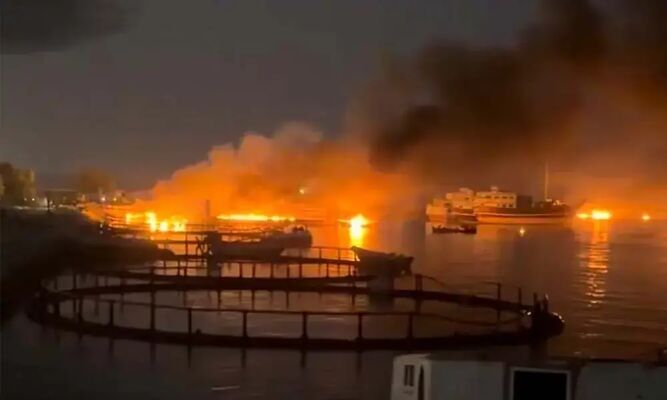
The United States launched a fresh wave of strikes on Iran after restoring a naval blockade on Wednesday, reigniting direct conflict. The escalation threatens global oil supplies through the Strait of Hormuz and raises fears of wider regional instability. Iran, Gulf nations, commercial shipping, and international energy markets are directly affected by the renewed hostilities.
US Central Command said the operation targeted Iranian military assets used to threaten commercial shipping in the Strait of Hormuz. Iranian state media reported explosions near Bandar Abbas, Qeshm Island, Bandar Imam Khomeini, and Bushehr. Iran’s Revolutionary Guards claimed they targeted the US Fifth Fleet in Bahrain, while Jordan said it intercepted three Iranian missiles. President Donald Trump warned that more severe strikes could follow unless Tehran returned to negotiations.
Read more: Trump renews Iran port blockade, warns of more strikes
The renewed fighting followed the collapse of an interim agreement reached last month to reduce hostilities. Iranian Deputy Foreign Minister Kazem Gharibabadi said the restored US blockade had effectively dismantled the Islamabad memorandum. Iran maintained the Strait of Hormuz would remain closed until Washington ended its military operations. Despite the escalation, diplomatic talks between both sides have not been formally suspended.
At 6 a.m. ET today, U.S. Central Command forces began launching a wave of strikes against Iran. The strikes are designed to further degrade military capabilities Iranian forces have used to attack commercial shipping in the Strait of Hormuz.
— U.S. Central Command (@CENTCOM) July 15, 2026
Regional security concerns also intensified as maritime attacks continued across the Gulf. A Norwegian tanker was damaged by an explosion near Oman, while Kuwait said one of its naval vessels was struck during an Iranian missile and drone attack, injuring four crew members. Trump also abandoned a planned 20 percent shipping levy, saying it would be replaced by trade and investment agreements with Gulf allies.
Read more: Trump Threatens to Destroy Iran’s Power Plants and Bridges
Iranian officials said renewed US strikes have killed at least 30 people since last week, while the military confirmed seven personnel died in Wednesday’s attacks. Daily life in Tehran appeared largely normal despite reported strikes elsewhere, but anxiety remained high across the Gulf. Israeli Prime Minister Benjamin Netanyahu warned Iran against attacking Israel, as analysts cautioned that prolonged conflict could further disrupt global energy supplies and international shipping.