An independent review of United Nations operations in the years before hundreds of thousands of Rohingya Muslims fled a violent crackdown by Myanmar’s military concluded that the organization’s many bodies failed to act together, resulting in “systemic and structural failures.”
The 36-page review by Gert Rosenthal, Guatemala’s former foreign minister, released Monday said the UN could conceivably have reconciled competing views on whether quiet diplomacy or outspoken advocacy against human rights abuses in Myanmar should have been used — but it didn’t.
The result — as in Sri Lanka at the end of the civil war against Tamil separatists in 2009 — was a “dysfunctional performance of the UN system,” Rosenthal said.
“Without question serious errors were committed and opportunities were lost in the UN system following a fragmented strategy rather than a common plan of action,” he said, adding that the “systemic failure was further magnified by some bureaucratic and unseemly infighting.”
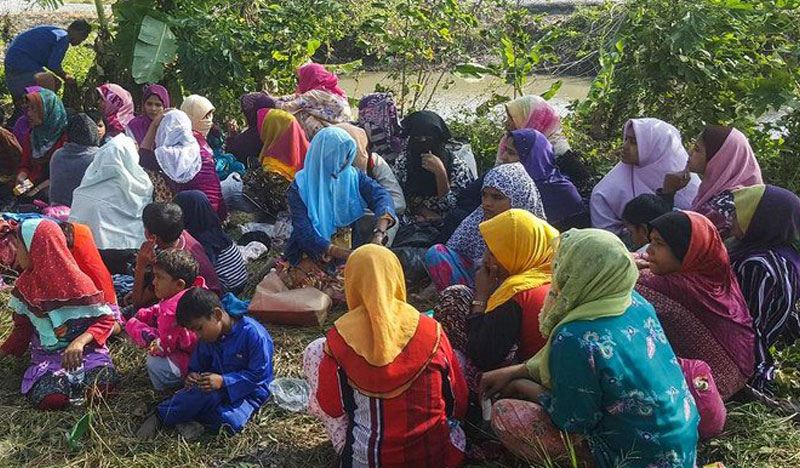
The long-simmering crisis exploded in August 2017 when Myanmar’s military launched what it called a clearance campaign in northern Rakhine State in response to an attack by a Rohingya insurgent group. The campaign forced more than 720,000 Rohingya to flee to neighboring Bangladesh and led to accusations that security forces committed mass rapes, killings and burned thousands of homes.
Rosenthal said the key lesson is “to foster an environment encouraging different entities of the UN system to work together.”
On a more optimistic note, he said since UN Secretary-General Antonio Guterres took office at the start of 2017, “there appears to be renewed recognition of the crucial importance of improved coordination.”
UN spokesman Stephane Dujarric said Guterres, who commissioned the report, has accepted all of its recommendations “and is committed to implementing them.”
“The secretary-general is very grateful to Mr. Rosenthal for producing a candid, forthright and very useful report,” he said.
The review covers the UN involvement in Myanmar since 2010, when the at the time military-fueled nation moved started opening up to the outside world, eventually leading to elections and moves toward a more open, market-oriented economy.
Rosenthal said “for all these positive tendencies with their ups and downs over time,” Myanmar also engaged in “long-festering discriminatory treatment against minorities” for decades, most especially the Rohingya.
Buddhist-majority Myanmar has long considered the Rohingya to be “Bengalis” from Bangladesh even though their families have lived in the country for generations. Nearly all have been denied citizenship since 1982, effectively rendering them stateless, and they are also denied freedom of movement and other basic rights.
In his conclusions and recommendations, Rosenthal said Myanmar’s government is mainly responsible for the grave abuses against the Rohingya.
He said the UN system “has been relatively impotent to effectively work with the authorities of Myanmar to reverse the negative trends in the area of human rights and consolidate the positive trends in other areas.”
He also noted “increasing criticism regarding the lack of leadership displayed by Aung San Suu Kyi,” the government’s de facto leader, “as well as her unwillingness to take distance from the military.”
Although the UN’s systematic failures are not down to any single entity or any individuals, Rosenthal said, “clearly there is a shared responsibility on the part of all parties involved in not having been able to accompany the government’s political process with constructive actions, while at the same time conveying more forcefully the United Nations’ principled concerns regarding grave human rights violations.”
Rosenthal said the UN Security Council as the world body’s most powerful organization should also bear some responsibility because its divisions failed to provide support to the UN Secretariat “when such backing was and continues to be essential.”
The Secretariat “would have benefited enormously” from Security Council support for an impartial UN observer presence in Rakhine state “to deter the use of violence in general,” he said.
He said the UN, which has multiple ways to engage its 193 member states, could find ways “to criticize and prod governments that engage in serious violations of international law while at the same time cooperating with them in delivering humanitarian and development assistance.”
“This would be the highly desirable objective to address the obvious dysfunctional performance of the UN system observed in both Sri Lanka and Myanmar,” he said.
But Rosenthal said “recent experience, precisely in both countries, has gone in the opposite direction, with mindsets and specific actions” competing rather than complementing each other.
Louis Charbonneau, UN director at Human Rights Watch, said the United Nations failed to keep its promise of “never again” to mass atrocities after the wartime deaths of tens of thousands of civilians in Sri Lanka.
“If the UN leadership is determined to change its internal culture, it needs to hold UN officials most responsible for ignoring ethnic cleansing in Myanmar accountable for their inaction,” he said.