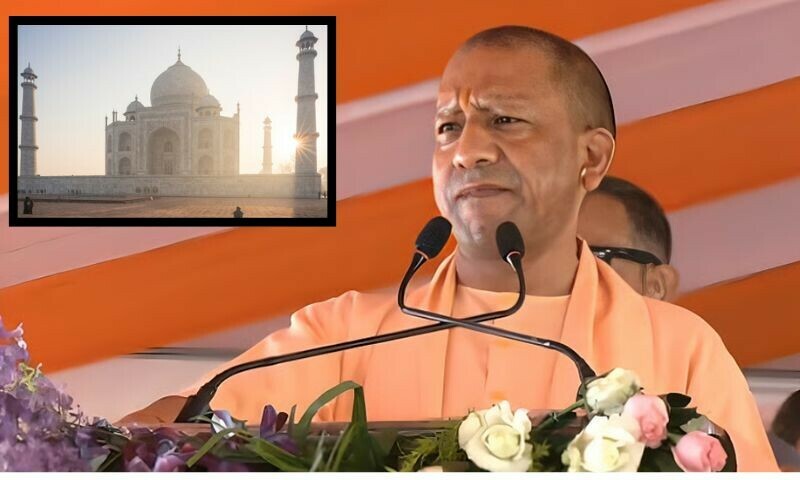
Agra, India – Authorities in India’s northern state of Uttar Pradesh have approved a proposal to rename two historical Mughal-era sites — a move that has sparked fresh debate over India’s cultural direction.
In a unanimous decision during a recent meeting of the Agra District Panchayat Board, members passed a resolution to rename Fatehabad city to ‘Sindoor Puram’ and the nearby Badshahi Bagh to ‘Shri Brahm Bagh’. The proposal now awaits final clearance from the state cabinet, the central government, and the governor, after which it will be notified in the official state gazette.
According to The Times of India, officials stated that the name ‘Sindoor Puram’ honors Operation Sindoor, a military operation conducted in April 2024 in Pahalgam, Indian-administered Kashmir, following a terrorist attack that left 25 foreign tourists and one local dead. The operation was widely covered in Indian media and used as a symbol of strength and nationalism.
The chairperson of the district panchayat, Manju Bhadoria, said the renaming reflects a “sense of national pride” and pays tribute to the sacrifices of Indian soldiers. The decision has been presented as part of a larger movement to celebrate indigenous culture and military achievements, particularly those tied to recent history.
However, the move has sparked concern among historians, scholars, and minority groups. They argue that such renaming efforts contribute to erasing centuries of Indo-Islamic history, especially that of the Mughal Empire, which left behind a vast cultural and architectural legacy. Fatehabad, originally called Samugarh, was renamed by Mughal Emperor Aurangzeb in 1658 after defeating his brother Dara Shikoh in the Battle of Samugarh — a pivotal moment in Mughal history. Likewise, the Badshahi Bagh, believed to be associated with Aurangzeb’s rule, holds historic value.
In recent years, several Mughal- or Muslim-origin names have been changed in India, including Allahabad to Prayagraj and Mughal Sarai to Pandit Deen Dayal Upadhyaya Junction. Critics argue these changes reflect political and ideological motivations, rather than efforts to preserve history.