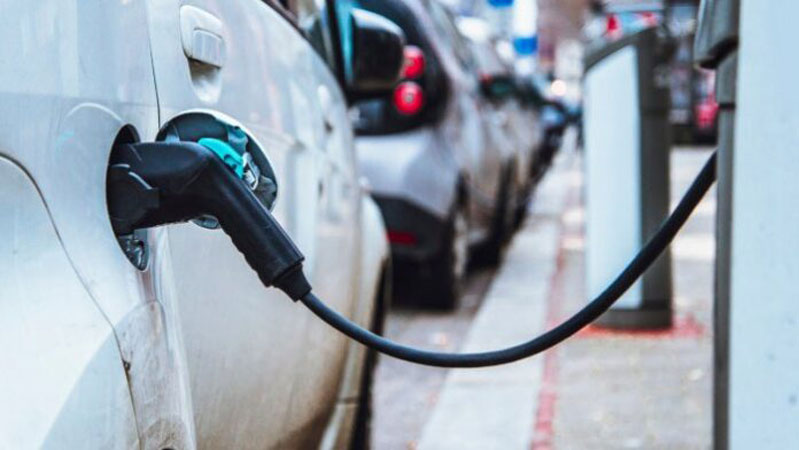
 The Electric Vehicle (EV) market in Pakistan appears promising; however, cost and financing remain major hurdles, and long-term, cost-efficient financing will be crucial to make EV ownership accessible and affordable for the general public.
This consensus emerged during the third edition of the Electric Vehicle (EV) Conference held here on Sunday. The event, organized by the Climate Action Center (CAC), was sponsored by the Bank of Pakistan and supported by EV manufacturing company Horwin. It served as a collaborative platform, highlighting that a sustainable EV transition in Pakistan demands coordinated efforts-from policymakers designing incentives, to banks offering flexible financing, and from manufacturers innovating technologies, to civil society raising awareness.
In his detailed presentation, Naeem Javid, Head of Project Finance and Equity Advisory at the Bank of Punjab, shed light on both global and local EV market trends, outlining the progress made and challenges faced. “EVs are rapidly becoming a mainstream source of mobility across the world,” he said, noting that China alone accounts for 65 percent of the global EV market. He further added that in 2024, 17 million passenger EVs were sold globally, constituting 24 percent of total car sales, with the number projected to rise to 20 million in 2025.
Referring to Pakistan’s New EV Policy (2025-2030), Javid stated that it offers significant tax incentives, including 1% GST on EVs compared to 17% for internal combustion engine (ICE) vehicles, and a 1% import duty on parts, along with a PKR 100 billion subsidy over five years for two- and three-wheelers. “The EV market in Pakistan looks promising, but cost and financing remain major hurdles. Long-term, cost-efficient financing will be crucial to make EV ownership affordable,” he emphasized, reiterating the central theme.
Setting the tone for the event, CAC Director Yasir Husain said the conference reflects a growing realization that electric mobility is no longer a distant dream. “Things are moving in the right direction, and the government has started taking the EV transition seriously,” Husain stated. He added that the new policy aims to phase out petrol and diesel vehicles, including both cars and bikes, contributing to cleaner air and reduced health issues. “Smog kills,” he remarked pointedly. “We must facilitate the establishment of battery recycling units immediately,” he insisted, stressing the urgency of complementary infrastructure.
The first panel discussion brought together Horwin’s General Manager Nauman Alvi, Capital Smart Motors’ Furrukh Raza, BoP’s Naeem Javid, and Nexcells’ CEO Jamshed Iqbal, to explore the opportunities and obstacles within Pakistan’s developing EV industry. The discussion spanned across two-wheelers, four-wheelers, and public transport.
Panelists agreed that although global EV adoption is accelerating-largely due to government incentives-Pakistan faces key structural and regulatory challenges. Javid pointed out that the State Bank of Pakistan (SBP) currently classifies EVs similarly to ICE vehicles for financing purposes, limiting the industry’s growth potential.
Meanwhile, Jamshed Iqbal of Nexcell highlighted the critical issue of battery quality in Pakistan’s EV market. “Many imported electric bikes rely on graphene lead-acid batteries, which have a short lifespan of just 500 cycles, lasting only 16 to 18 months. This leads to consumer dissatisfaction,” he said. Iqbal stressed the need for standardization and quality assurance in battery imports to support sustainable industry growth.
The second panel, moderated by Maira Mumtaz from CAC, focused on inclusivity and accessibility, and how EVs can empower women, low-income communities, and enhance Pakistan’s energy infrastructure.
Muhammad Saeed Akhter, Vice President Sales of Okla Pakistan, shared that Okla has achieved over 3 million two-wheeler EV sales globally since last year. He emphasized that price remains the most influential factor for adoption in Pakistan. “A basic two-wheeler EV costs between Rs 150,000 and Rs200,000, and we expect to sell over 116,000 units nationwide this year,” he said. He also noted a surge in EV use among women, stating that 80% of scooty users are female.
Shahzaib Ahmed emphasized the potential for localizing EV components to boost employment and industrial growth. He advocated for policy regulations determining the source and quality of imported parts. “There should be approved battery suppliers for Pakistan to prevent substandard imports,” he urged.
Muhammad Yasin from the Punjab Mass Transit Authority discussed the electrification of public transport, highlighting that 69 EV buses are now operational in Multan. “These buses, like the metro system, are time-saving and eco-friendly, but the lack of charging infrastructure remains a significant bottleneck,” he noted.
Wrapping up the technical discourse, Dr. Khalid Waleed, an academic and energy expert from SDPI, emphasized that Pakistan’s EV journey must be aligned with the “three Es-Economy, Energy, and Environment.” He stressed that EV charging infrastructure should be powered by renewable sources to ensure environmental sustainability. “EVs should be a necessity, not a luxury,” he said, adding that public transport is the ideal starting point for widespread adoption.
Concluding the conference, CAC’s Hussain Rizvi and Javeria, who hosted the event, remarked that the Multan conference marks another milestone in building momentum for electric mobility in Pakistan. “The journey is uneven, but the direction is clear – the future of transport is electric. Through collaboration and persistence, we can make that future sustainable and inclusive,” they said in their closing remarks.