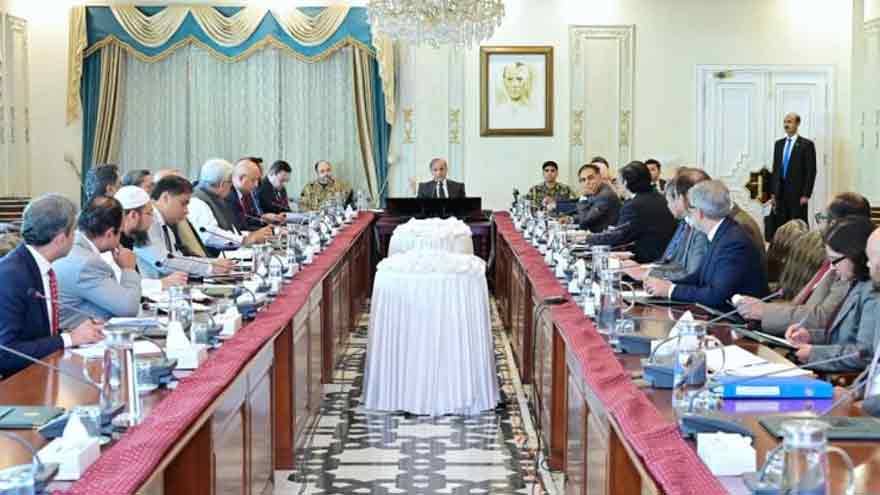
ISLAMABAD – Prime Minister Shehbaz Sharif on Monday reaffirmed his government’s commitment to transforming Pakistan into a cashless economy, calling it a key step toward sustainable development and improved governance.
Chairing a meeting on the progress of the digital financial transformation, the prime minister directed authorities to expand awareness campaigns, particularly in rural areas, to encourage the shift away from traditional cash transactions. “The entire world is moving towards a digital economy, and Pakistan must move forward alongside it,” he said, adding that his administration’s early focus on digitalization was now showing tangible results.
Read More: Cashless economy for Pakistan: challenges and way forward
The meeting was informed that digital payments for utility bills through RAAST QR codes have facilitated billions of rupees in cashless transactions. Additionally, 10 million digital wallets under the Benazir Income Support Programme (BISP) are expected to be fully operational by the end of the month, enabling beneficiaries to receive aid directly through these wallets.
The prime minister was also briefed on the integration of mobile government service apps in Islamabad with the RAAST system, as well as the linkage of business licensing and payments through QR codes. He noted that the government has already issued licenses for digital banks, helping to expand financial inclusion to more than 68% of the population.
Read More: Finmin’s aide highlights reforms, cashless economy agenda
PM Shehbaz praised the Ministry of Finance, IT Ministry, State Bank of Pakistan, FBR, and NADRA for their “satisfactory progress,” urging them to meet all digitalization targets within the stipulated timeframe.