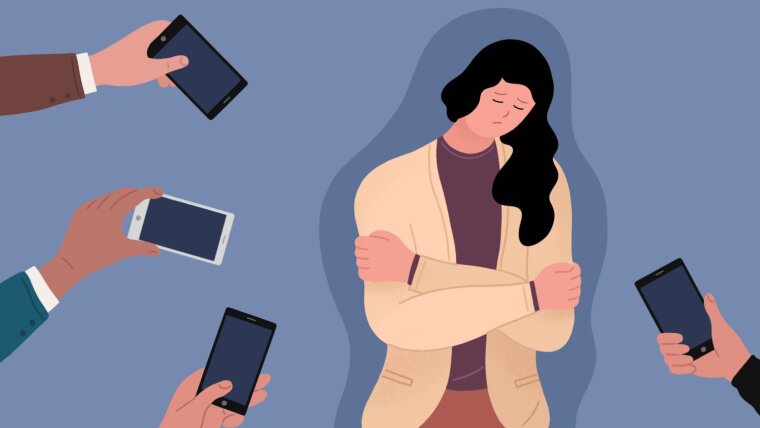
ISLAMABAD: Violence against women is one of the most persistent human rights violations globally, and in Pakistan, it is increasingly spreading into the digital realm. Online harassment, cyber-stalking, deepfake pornography, doxxing, grooming, and coordinated hate campaigns now pose serious threats to women’s safety, psychological health, and social participation.
Read More: How Cyber Harassment Silences Marginalized Voices in Pakistan
Pakistan’s digital transformation has been rapid, with over 143 million internet users in 2024, yet protection systems remain weak. The Digital Rights Foundation reported 3,171 complaints of tech-facilitated gender-based violence in 2024, with women filing over half of these cases. Despite this, under-reporting remains high, with many women refraining from filing complaints due to fear or social stigma.
Tech must protect, not harm. But 8.3% of women report tech-facilitated GBV — from online abuse to threats of “going viral.”
Let’s make digital spaces safe for everyone.#EndVAW #DigitalSafety #16DaysofActivism pic.twitter.com/QlcdeVg6UA
— UNFPA Bangladesh (@UNFPABangladesh) November 24, 2025
Cybercrime data highlights the scale of the problem. The Federal Investigation Agency (FIA) processed more than 134,000 complaints in 2023, verifying 82,396 and registering only 1,375 FIRs, with a conviction rate under 4%. Similarly, the National Cyber Crime Investigation Agency reported 171,600 complaints in its first full year, showing a persistent rise in digital offences against women.
Minister of Gender, Children, Disability and Social Welfare Mary Navicha says digital technology is fuelling new forms of gender-based violence, with many women and girls facing online harassment and abuse. pic.twitter.com/sOjGkFdDOd
— NationOnline (@NationOnlineMw) November 24, 2025
Experts say that digital violence intersects directly with Pakistan’s gender inequality. The World Economic Forum’s 2025 Global Gender Gap Index ranks Pakistan last out of 148 countries, highlighting low political representation, limited economic participation, and gaps in education. Online harassment undermines women’s visibility, voice, and digital empowerment, reinforcing inequality.
In Punjab, 85 women face violence every day. From rape to domestic abuse, the crisis continues, but lack of justice and underreporting keep many cases hidden. Experts call for stronger implementation, awareness, and gender-responsive policing.
Read details:… pic.twitter.com/al0IFwQfT1
— Voicepk.net (@voicepkdotnet) November 22, 2025
Advocates call for urgent reforms: laws must criminalise deepfakes, hybrid harassment, and digital disinformation campaigns, while institutions need gender-sensitive cyber units and trained investigators. Public awareness campaigns on online safety, digital literacy, and legal rights are also essential. Society must collectively reject online misogyny and create safe spaces for women to participate digitally without fear.
Read More: Threats of Digital Terrorism for Pakistan
On International Day for the Elimination of Violence Against Women, Pakistan faces a critical challenge: digital violence is real violence, and addressing it is central to gender equality and the empowerment of women in every sphere of life.