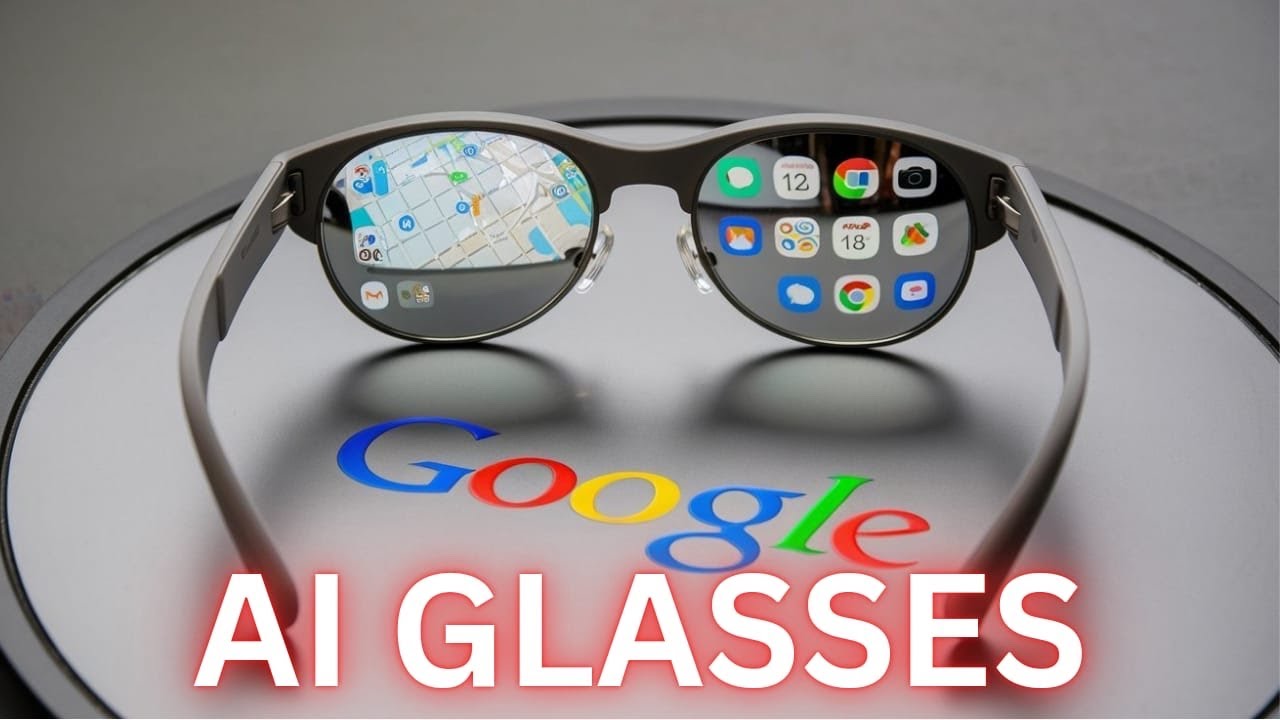
Google has announced plans to launch its first AI-powered smart glasses in 2026, marking a direct challenge to Meta, the current leader in consumer AI eyewear. The Alphabet-owned company revealed a dual-strategy approach, developing two categories of smart glasses in collaboration with established eyewear and tech brands.
Read More: Alibaba enters AI smart glasses race with quark launch
The first category, Audio-Only AI glasses, will offer screen-free assistance. Equipped with speakers and microphones, these glasses will allow users to interact with Google’s Gemini AI assistant for tasks such as information lookup, translation, and media control. Users will be able to access AI-powered features without a visual display, relying solely on audio interactions.
Google $GOOGL says its first Gemini AI glasses are coming in 2026, with both display and audio focused versions built with partners like Samsung, Xreal, Warby Parker $WRBY & Gentle Monster, per Bloomberg. pic.twitter.com/JTKy2uRnFe
— Wall St Engine (@wallstengine) December 8, 2025
🚨JUST IN – Google $GOOG says ‘AI Glasses’ powered by Gemini are coming in 2026.
Sundar is coming for Zuckerberg $META pic.twitter.com/knvty9RFXQ
— Jacob Elwood (@JTE_Theta) December 8, 2025
The second category, Display AI glasses, will include a lightweight, in-lens display. This technology will provide personalized information such as turn-by-turn navigation, live translation captions, message previews, and contextual data about the wearer’s surroundings. Google has not yet revealed which category will be launched first but confirmed that the debut will occur in 2026.
These AI glasses will run on Google’s Android XR operating system, the same platform used in Samsung’s Galaxy XR headset. Unlike designing the glasses solo, Google is partnering with leading eyewear and tech brands for hardware development. Warby Parker confirmed its collaboration, describing the upcoming AI glasses as lightweight and innovative. Gentle Monster, Samsung, and Xreal are also collaborating, with Xreal working on a separate wired XR device codenamed Project Aura.
In addition to hardware, Google plans to roll out major software updates for the Android XR platform, which is expected to become the “Android equivalent” for wearable computers. The combination of AI-powered software and innovative hardware aims to provide users with a seamless, interactive experience, bridging the gap between real-world vision and digital assistance.
Read More: Meta unveils smart glasses with built-in display
With these initiatives, Google positions itself to compete in the rapidly growing AI eyewear market, offering both audio-driven and display-based solutions for next-generation smart glasses.