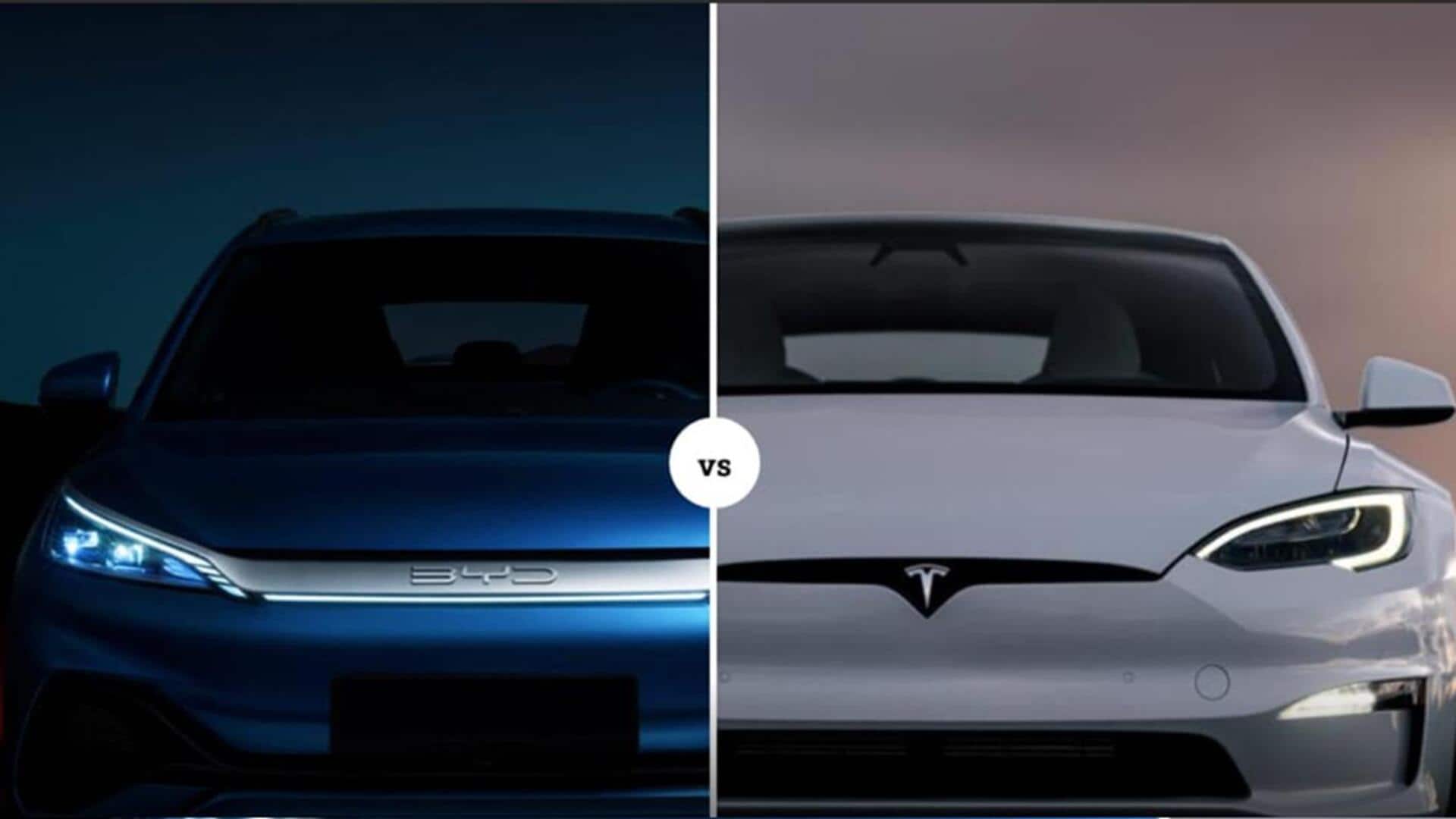
SHENZHEN: China’s electric vehicle giant BYD is on track to surpass Tesla as the world’s largest EV seller in 2025, marking a major shift in the global auto industry as competition intensifies and market dynamics change.
Read More: Chinese giant BYD partners with HUBCO to introduce EVs in Pakistan
Both companies are expected to release their final sales figures soon, but year-to-date data indicates BYD has already built an unassailable lead. By the end of November 2025, Shenzhen-based BYD had sold 2.07 million electric vehicles, including battery-powered and hybrid models, while Tesla had delivered 1.22 million units by the end of September.
Although Tesla recorded a surge in sales during the third quarter — nearly half a million vehicles — the boost was largely driven by buyers rushing to take advantage of a US electric vehicle tax credit before it expired in September under legislation backed by President Donald Trump. Analysts expect Tesla’s fourth-quarter sales to soften, bringing its total 2025 deliveries to around 1.65 million vehicles, a year-on-year decline of nearly eight per cent.
Deutsche Bank estimates an even steeper slowdown, citing falling demand in North America and Europe, alongside increased competition in China. Industry analysts say the removal of the $7,500 US tax credit has disrupted the American EV market, creating a transition period before demand stabilises.
Tesla has also faced political headwinds, with CEO Elon Musk’s public support for right-wing figures affecting sales in some markets. At the same time, competition from Chinese manufacturers — led by BYD — and established European automakers has intensified.
Despite its rapid rise, BYD faces challenges at home, where price-sensitive consumers have pressured margins. To counter this, the company has accelerated its global expansion, building overseas production capacity and supply chains to navigate tariffs and trade barriers.
Read More: Tesla’s model Y faces slow sales despite bold incentives
Meanwhile, Tesla’s long-term prospects may hinge on autonomous driving technology. Analysts believe advances in its Full Self-Driving software and the planned launch of its Cybercab robotaxi in 2026 could help revive demand and reposition the company for future growth.