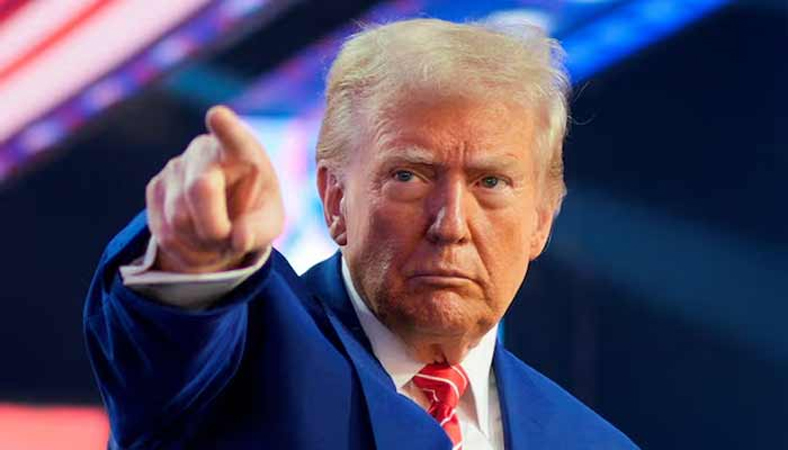
US President Donald Trump has imposed a 25% tariff on certain AI chips, including Nvidia’s H200 and AMD’s MI325X. The move follows a nine-month national security investigation under Section 232 of the Trade Expansion Act. White House officials said the tariffs aim to boost domestic semiconductor production and reduce reliance on foreign suppliers.
The tariffs target high-performance semiconductors and devices containing them, but exclude chips imported for US data centers. Startups, consumer devices, civil industrial applications, and public sector uses are also exempt. Commerce Secretary Howard Lutnick has discretion to grant additional exemptions if needed.
Read more: Trump confident US exports will gain access to China
The US currently manufactures only about 10% of the chips it requires, creating both economic and national security risks, the White House said. Most chips are made overseas, largely by Taiwan Semiconductor Manufacturing Co., highlighting the need for domestic production incentives.
Shares of Nvidia, AMD, and Qualcomm dipped slightly after the announcement. Trump previously delayed tariffs on Chinese chip exports until June 2027 and allowed Nvidia to sell H200 chips to China under certain conditions. New rules require China-bound chips to transit the US for testing before tariffs apply.
Read more: China vows to counter Trump’s Iran tariffs
Experts say this move is part of a broader “tariff blitz” to strengthen American manufacturing. Future actions could impose wider semiconductor tariffs to further encourage domestic production, while avoiding stacking with existing duties on steel, aluminum, and autos.