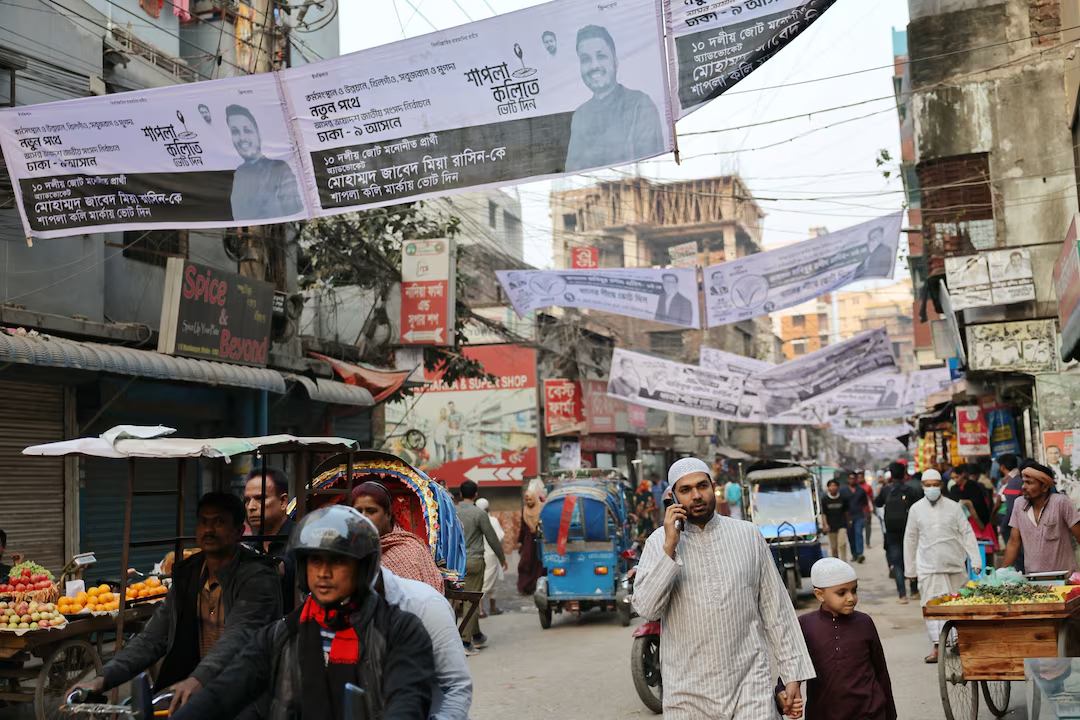
Bangladesh heads to the polls on February 12 for what many observers describe as the country’s first truly competitive election in more than a decade. The vote follows the ousting of former Prime Minister Sheikh Hasina in 2024, which dramatically reshaped the political landscape and ended a long period of one-party dominance.
For years, national elections were controlled by Hasina’s Awami League, while opposition parties remained sidelined or boycotted the process. However, with the ruling party now banned, space has opened for new political forces, creating an environment where genuine competition and public participation have returned to the democratic process.
Read more : Railways minister reaffirms commitment to boosting Bangladesh …
Meanwhile, the Bangladesh Nationalist Party, led by Tarique Rahman, is widely expected to secure a parliamentary majority, though the Jamaat-e-Islami coalition remains a strong challenger. This contest marks the first real electoral battle since 2009, ending nearly fifteen years of restricted political choice.
Analysts note that nearly one quarter of the electorate is under the age of thirty, making Gen Z voters a decisive factor in shaping the outcome. Young citizens are prioritizing issues such as corruption, rising living costs, job opportunities, and freedom of expression over traditional ideological or religious narratives.
Read more : Bangladesh’s ex-leader Hasina and niece sentenced in graft case
At the same time, Bangladesh faces serious economic pressures, including high inflation, slowing investment, and growing dependence on international financial institutions for stability. Voters are therefore focusing on leaders who show competence, accountability, and the ability to manage economic recovery effectively.
Beyond domestic impact, the election also carries regional importance as foreign influence shifts within South Asia. Observers suggest that different outcomes could alter Bangladesh’s diplomatic direction, making the February 12 vote a potential turning point for both national stability and regional balance.