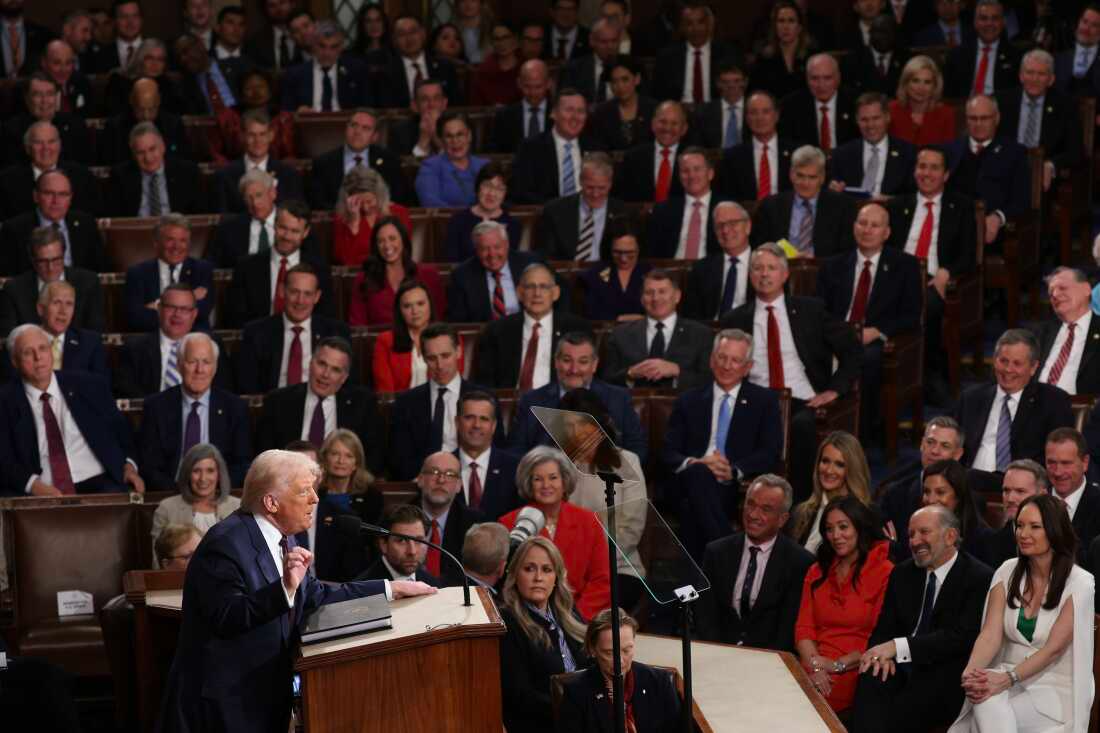
Donald Trump is set to deliver his 2026 State of the Union address Tuesday night in Washington, D.C., facing a politically charged atmosphere as new polling shows broad public concern over his handling of key issues, including inflation, tariffs, immigration, foreign relations and the economy.
Read More: Trump’s State of the Union address and Pakistan
A majority of Americans disapprove of the president’s performance on several major policy fronts. The prime-time address offers Trump a critical opportunity to present his agenda directly to millions of viewers ahead of November’s midterm elections, when control of Congress will be at stake.
🚨 NOW: ENDLESS lines of US military equipment and personnel are rolling up to the US Capitol for President Trump’s address tonight
They’re planning on making this the most secure State of the Union in history.
Keep Trump safe at all costs. pic.twitter.com/1mq7zEnVZf
— Nick Sortor (@nicksortor) February 24, 2026
Several Democratic lawmakers have announced they will skip the speech in protest. House Minority Whip Katherine Clark said she would not attend, accusing the president of misleading the public and failing to deliver on campaign promises to lower costs and improve security. Senate Minority Leader Chuck Schumer also criticized the administration, predicting the address would avoid accountability on economic and foreign policy challenges.
Meanwhile, House Republican Conference Chair Lisa McClain said the president is expected to highlight tax cuts, deregulation and affordability measures, framing the speech as pivotal for shaping the party’s midterm message.
The address comes as a partial government shutdown over Department of Homeland Security funding enters its second week, underscoring ongoing partisan gridlock. Security fencing has been erected around the Capitol ahead of the event.
Read More: Significance of Trump’s state of the Union address for international state actors
First Lady Melania Trump will attend with guests tied to her foster care and education initiatives, while bipartisan lawmakers plan symbolic gestures of cooperation on the House floor.