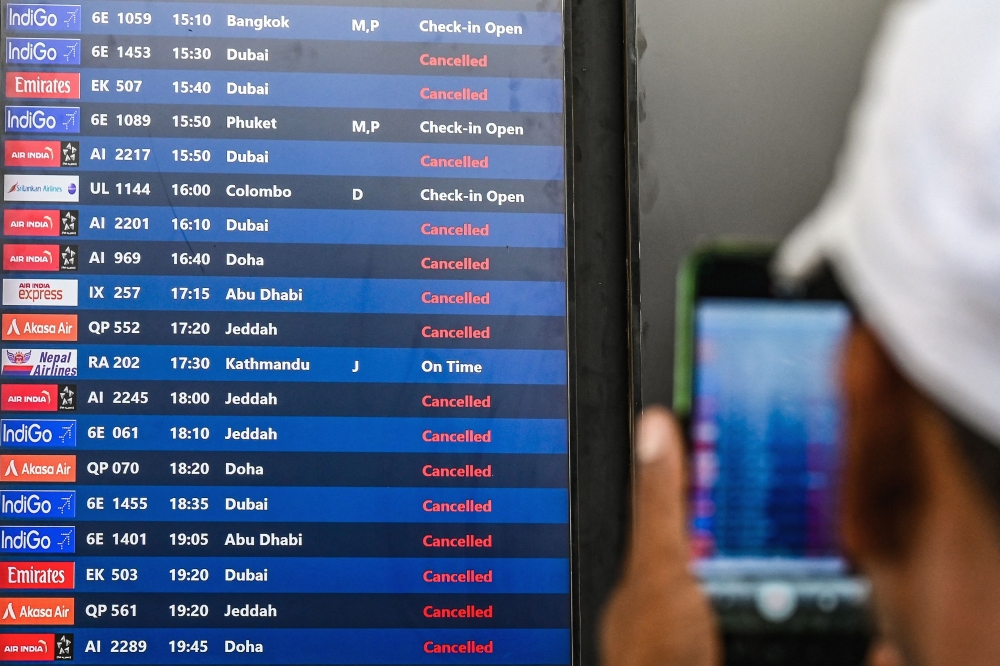
Tens of thousands of travellers have been left stranded across the Gulf as rising Middle East tensions disrupt air travel and close key airspace corridors.
Read More: UAE blocks airspace for strikes on Iran
Airspace in Qatar remains shut, leaving around 8,000 transit passengers stuck in Doha after U.S.-Israeli strikes on Iran triggered regional retaliation. Limited departures resumed from the United Arab Emirates on Monday, but cancellations and uncertainty continue as Iran launches missile and drone attacks across the Gulf.
Dubai is no longer immune to regional conflict
Gulf airspace closure disrupts thousands of journeys @eriknjoka has more pic.twitter.com/oa3vDUxoKK
— WION (@WIONews) March 3, 2026
Dubai and Doha serve as major east-west aviation hubs, connecting Europe and Asia and handling vast daily passenger volumes. With flights suspended, many travellers are seeking alternative land routes to exit the region.
One Dubai resident, Sara, said she plans a 33-hour journey to Germany to avoid missing her brother’s wedding. Her route involves travelling by car to Muscat in Oman, flying onward to Jeddah in Saudi Arabia, then connecting through Amsterdam to Düsseldorf. “It’s a very long journey, but for me, it was just important,” she said.
Oman has kept its airspace open and become a key gateway for those fleeing disruptions in neighbouring states. State carrier Oman Air and budget airline SalamAir arranged shuttle buses from Sharjah to Muscat, an eight-hour journey.
Meanwhile, governments including the United Kingdom, Spain, Italy and Germany have begun evacuation efforts. Germany chartered flights from Riyadh and Muscat to bring home vulnerable citizens.
Read More: 11 int’l flights stranded at Pakistan’s airports amid Middle East crisis
Saudi Arabia has also emerged as an exit route. Travellers report lengthy but manageable cross-border journeys, though costs have surged sharply. A trip from Dubai to Riyadh that typically costs around $200 by air has risen to over $1,000 by road.
With no clear timeline for de-escalation, uncertainty continues to grip one of the world’s busiest travel corridors.