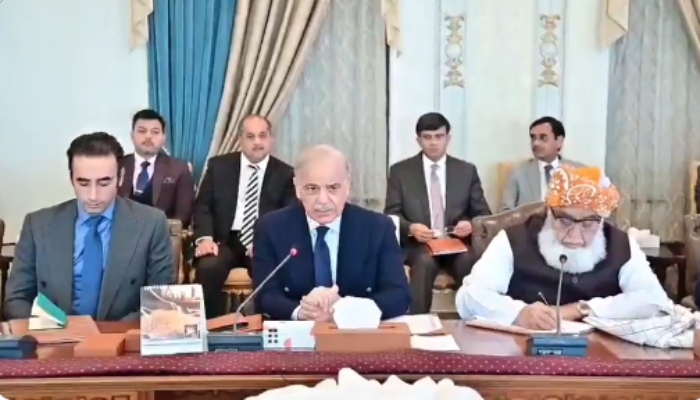
Prime Minister Shehbaz Sharif chaired a key meeting on Middle East tensions in Islamabad. He briefed parliamentary leaders on Pakistan’s efforts to reduce regional conflict. The developments affect Pakistan’s security, diplomacy, and political unity.
The in-camera session took place at the Prime Minister’s House. Lawmakers received detailed briefings on Afghanistan, Iran, and Gulf tensions. Officials highlighted Pakistan’s diplomatic outreach to ease rising hostilities. They stressed that de-escalation remains Islamabad’s foremost priority. The government reaffirmed its commitment to regional peace and stability.
Read more: Middle East tensions disrupt Pakistan’s sea trade
Moreover, parliamentary leaders from multiple parties openly shared their views. Participants emphasized national unity amid escalating regional uncertainty. They appreciated Pakistan’s diplomatic role in promoting dialogue. However, they urged the government to further accelerate its diplomatic efforts. Several leaders also presented suggestions for the future strategy.
According to sources, officials informed attendees that Pakistan made every possible effort to reduce tensions. They said easing friction between Iran and Gulf states remains critical. The briefing also addressed broader security concerns affecting the region. Leaders agreed that coordinated national policy is essential during the crisis.
Read more: Pakistan steps up diplomatic efforts to de-escalate ME crisis
Representatives from major political parties attended the session. However, no member of Pakistan Tehreek-e-Insaf joined the in-camera briefing. The party previously decided to boycott meetings until its founder, Imran Khan, is granted a meeting. The absence underscored ongoing political divisions despite calls for unity.