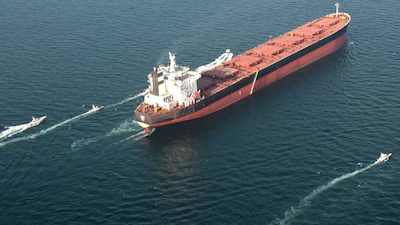
New Delhi — Iran has asked India to release three tankers seized earlier this year as part of ongoing discussions aimed at ensuring the safe passage of vessels through the strategically vital Strait of Hormuz, according to sources familiar with the matter.
Read More: Iran allows two Indian LPG tankers to cross Strait of Hormuz
Indian authorities had detained the vessels near their waters in February, alleging that they concealed or altered their identities and were involved in illegal ship-to-ship transfers at sea. The tankers — Asphalt Star, Al Jafzia and Stellar Ruby — remain anchored off Mumbai as investigations continue.
🔴 Iran asks India to release seized tankers in exchange for safe Hormuz passage – report
👉 Read more on i24NEWS: https://t.co/TefWENWSVM
— i24NEWS English (@i24NEWS_EN) March 16, 2026
Iran has raised the issue during diplomatic engagements, with its ambassador to New Delhi meeting Indian foreign ministry officials on Monday. Alongside the request for the tankers’ release, Tehran has also sought supplies of certain medicines and medical equipment, one source said.
The talks come amid heightened tensions in the region following recent conflict involving Iran, which has disrupted maritime traffic through the Strait of Hormuz — a key route for global oil and gas shipments. Shipping activity in the area has slowed significantly, with multiple vessels facing delays or security risks.
India, which relies heavily on energy imports from the Gulf, has expressed concern over the safety of its ships and crew. Officials said at least 22 Indian-flagged vessels and more than 600 Indian seafarers remain in the region. A significant number of these vessels are carrying liquefied petroleum gas (LPG), critical for domestic consumption.
Read More: US warns Iran over Hormuz blockade
In recent days, Iran allowed two Indian LPG tankers to pass through the strait, signaling a possible willingness to maintain limited cooperation despite tensions. However, Indian officials have maintained that no formal exchange or agreement has been reached.
The situation underscores the delicate balance between enforcement actions and diplomatic negotiations, as both countries seek to protect their strategic and economic interests in a volatile regional environment.