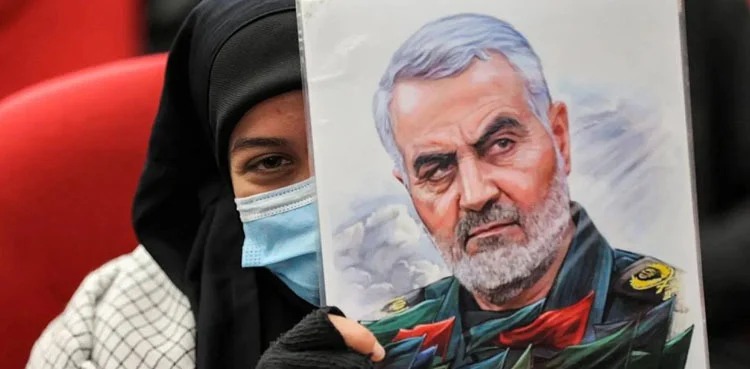
Authorities in the United States have detained relatives of the late Iranian commander Qassem Soleimani after revoking their lawful permanent resident status. Officials confirmed that federal agents took Hamideh Soleimani Afshar and her daughter into custody after their green cards were cancelled as part of an immigration decision taken by the State Department.
According to the United States Department of State, Secretary of State Marco Rubio revoked the residency status of the two individuals, after which U.S. Immigration and Customs Enforcement placed them under detention. Officials said the move was taken after reviewing their immigration status and alleged links to narratives supportive of Iran’s government.
Read more : Trump says US can reopen Strait of Hormuz –
Soleimani, who led Iran’s elite military operations abroad, was killed in a US drone strike in Baghdad in January 2020 during the presidency of Donald Trump. His death dramatically escalated tensions between Washington and Tehran at the time. The recent detention of his relatives comes as regional hostilities and political disputes continue to intensify.
Meanwhile, US officials also announced earlier actions targeting other individuals connected to senior Iranian political figures. The State Department said it recently revoked the legal residency of Fatemeh Ardeshir-Larijani and her husband Seyed Kalantar Motamedi. Authorities confirmed that both individuals have already left the United States and are now barred from future entry.
Read more : Hegseth fires top US army general in new shake-up
Their removal follows the reported killing of Iranian political figure Ali Larijani, who was considered an influential architect of Iran’s security policy. He was reportedly killed during a mid-March US-Israeli air strike. The developments have unfolded while the broader confrontation between Washington, Israel and Tehran continues to shape regional political dynamics.
At the same time, immigration and civil rights advocates have raised concerns about the administration’s expanding deportation policies during Trump’s second term. Critics argue that some enforcement actions could raise questions about due process and free speech protections. However, authorities maintain that immigration laws allow such actions when national security concerns or policy violations are identified.