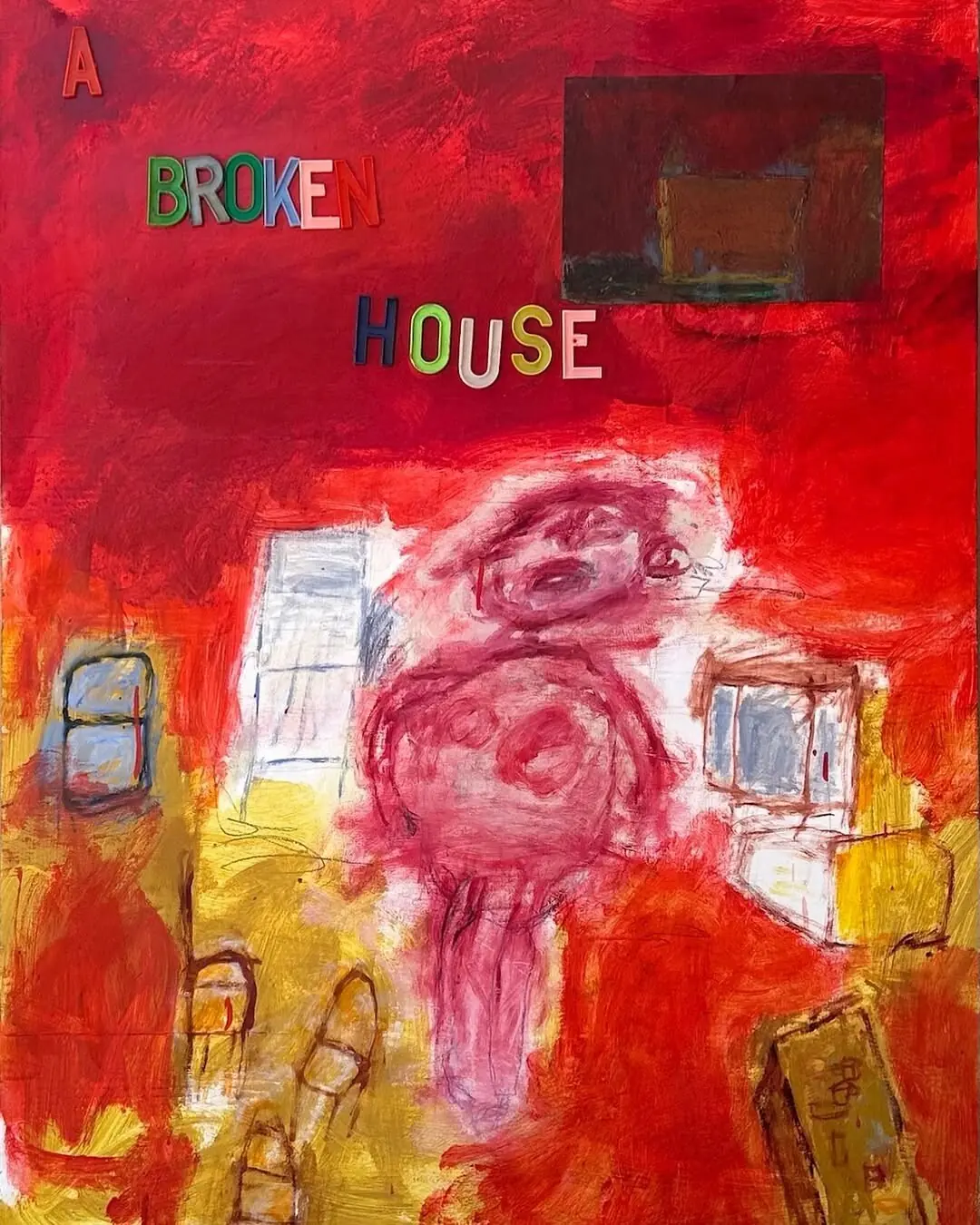
Pakistani artist Quddus Mirza examines the intersection of personal emotion and global violence in his latest solo exhibition, New Works, recently displayed at Canvas Gallery. The exhibition featured nine large oil paintings and three smaller sketches, using simplified visual language to reflect on contemporary conflict and human suffering.
Read More: Ocean Art Gallery hosts ‘Meditations of Form’ exhibition
Held in Karachi from April 7 to 16, 2026, the show explored themes of war, destruction, and emotional trauma through Mirza’s signature faux naïf style. His paintings deliberately adopt child-like simplicity, flattened perspectives, and scratchy lines, creating an unsettling contrast with the heavy subject matter of armed conflict and mass suffering.
The works draw visual inspiration from historic anti-war art traditions, including references to Guernica by Pablo Picasso, often regarded as one of the most powerful artistic responses to war in modern history.
Several paintings in the exhibition depict aircraft, fragmented landscapes, graves, and symbolic objects. In A Stained Landscape, a military plane dominates the upper canvas while graves and a child-like figure occupy the ground below, symbolising destruction from above and civilian suffering below. Another work, The Ghost City, presents scattered everyday objects across a red backdrop, evoking the aftermath of bombardment and urban devastation.
Mirza’s The Book Still Burning introduces ambiguity through a symbolic burning book, allowing viewers to interpret themes of ideology, religion, and historical conflict. Meanwhile, Black Birds incorporates collage elements, including images of warplanes and a book titled “How States Are Governed,” critiquing governance, power, and the collapse of international order.
Art critics noted that the exhibition resonates with contemporary conflicts, including violence in Gaza and regional instability involving Iran, while maintaining universal themes of grief and helplessness.
Read More: Pakistan’s maritime exhibition highlights local defence innovations
Through simplified forms and emotionally charged colour, Mirza’s latest body of work offers viewers a reflective space to process violence, injustice, and the emotional consequences of war in an increasingly unstable world.