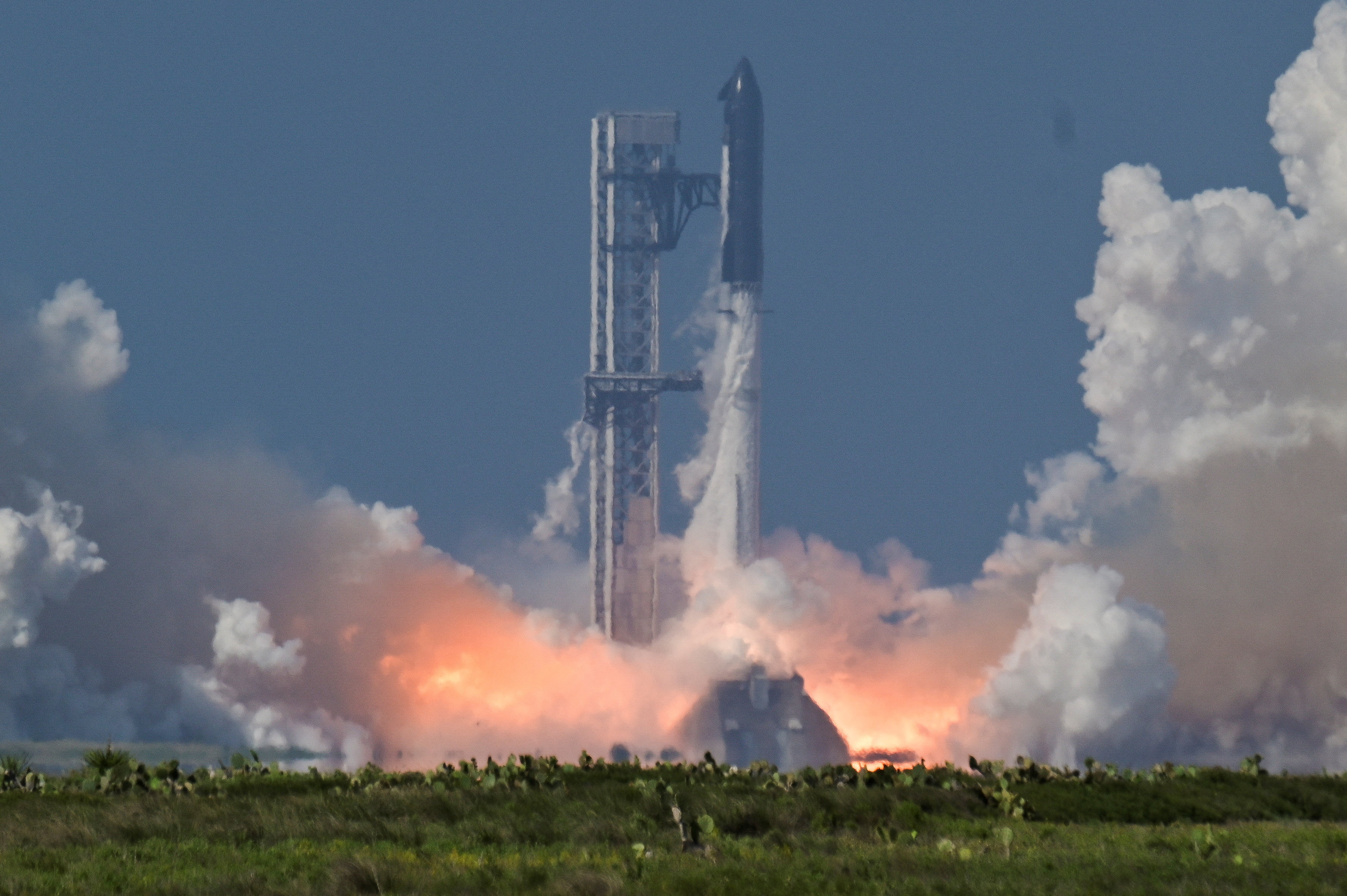
SpaceX completed a largely successful test flight of its next-generation Starship rocket on Friday, marking a key milestone as the company moves closer to a potential record-breaking initial public offering.
The uncrewed mission, launched from Starbase, Texas, successfully deployed mock satellites and completed a controlled splashdown in the Indian Ocean, achieving most of its planned objectives despite minor technical anomalies during flight.
Read More: SpaceX test blast puts flights at risk
The Starship vehicle, developed as a fully reusable spacecraft, is central to SpaceX’s long-term goals of reducing launch costs, expanding its Starlink satellite network, and supporting future deep-space missions, including planned NASA lunar operations under the Artemis program.
During the test, the upper-stage Starship separated from its Super Heavy booster as planned and continued its suborbital flight. It successfully released simulated payloads, including mock Starlink satellites, before re-entering Earth’s atmosphere for a controlled descent.
Although one of the six engines failed early in the flight, mission controllers proceeded with most planned operations. The booster stage did not complete a planned boost-back burn but separated successfully and descended separately as intended.
The mission lasted just over an hour and ended with Starship performing a controlled landing in the Indian Ocean, where it ultimately broke apart after splashdown. SpaceX confirmed it did not plan recovery for either stage during this test.
Chief executive Elon Musk praised the mission and congratulated the engineering team, calling it a major step forward for the upgraded Starship V3 system.
Analysts said the test represents an important validation of SpaceX’s development strategy, which relies on rapid iteration and high-risk testing to improve performance over time. Experts noted that the flight provides valuable engineering data that will support future missions.
Read More: SpaceX starship explodes during routine test at Texas launch site
The successful test comes ahead of SpaceX’s expected IPO next month, which could value the company at more than $1 trillion and mark one of the largest public offerings in history.
Starship remains a critical component of SpaceX’s ambitions for orbital missions, satellite deployment, and future Mars exploration, with further test flights expected as development continues.