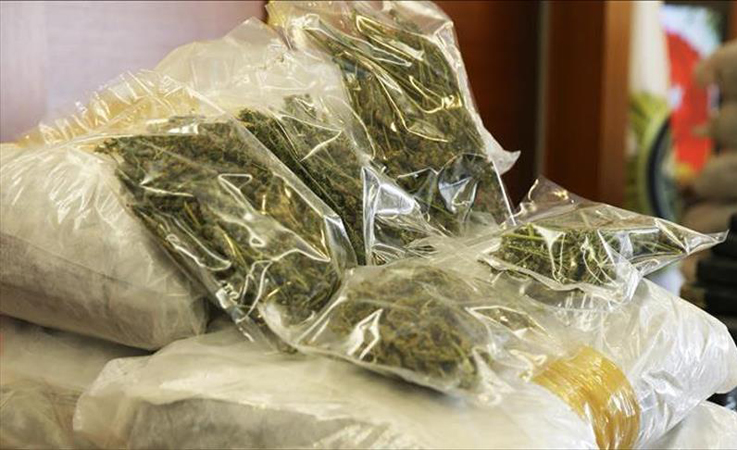
 Multan Police have intensified operations against organised drug trafficking networks operating across urban centers and targeting educational institutions, arresting more than 1,330 suspects, including over 15 women, during the past five months.
According to official data, over 1,300 cases were registered under the Control of Narcotic Substances Act (CNSA), with a significant number booked under Section 9(c)(e), a non-bailable offence related to commercial-scale narcotics trafficking.
During the crackdown, police recovered large quantities of narcotics including 75 kilograms of crystal meth, 94 kilograms of heroin, and 179 kilograms of charas. Officials described the recoveries as evidence of a “deep-rooted and evolving trafficking network” operating through inter-district supply chains.
Investigations indicate that drug supply lines extend across multiple districts, including connections with Khyber Pakhtunkhwa, while various fragmented groups are reportedly involved in coordinated distribution systems. Officials said inquiries into these networks are ongoing.
Police further revealed that traffickers were increasingly using social media platforms and encrypted communication channels to coordinate deliveries and expand their reach, particularly in the distribution of synthetic drugs. Most arrested suspects were operating in urban areas, with a focus on supplying narcotics to students in universities, colleges, and hostel networks.
Authorities also noted the involvement of women in trafficking networks, allegedly used to reduce suspicion and facilitate drug delivery within educational institutions. Officials identified several alleged operatives, including women such as Sumera Mehreen, Rukhsana Bibi, Kiran, Naseem Mai, Maqsooda Bibi, Salma Bibi, and Shakeela Younis, along with male suspects including M. Waqas, Mujeeb-ur-Rehman, M Kamran, M. Arshad, Jamshed, Ishfaq, and Muhammad Mushtaq.
Officials said the evolving pattern reflects a shift from street-level drug dealing to structured, network-based trafficking involving logistics coordination, digital communication, and cross-district movement.
City Police Officer (CPO) Multan Sadiq Ali Dogar, while reviewing anti-narcotics operations, said the police remain fully committed to eliminating drug trafficking networks, particularly those targeting youth and educational institutions.
He said strict enforcement measures were being implemented without discrimination and warned that no individual or group involved in narcotics trade would be allowed to undermine public safety. He added that intelligence-based operations would be further strengthened to dismantle remaining networks.
Police said coordination with prosecution authorities had been enhanced to ensure effective convictions, while digital monitoring and inter-agency cooperation were being expanded to curb synthetic drug supply chains.
Authorities added that the crackdown would continue with greater intensity in the coming months as part of a sustained strategy to target both suppliers and facilitators operating within and outside the district.