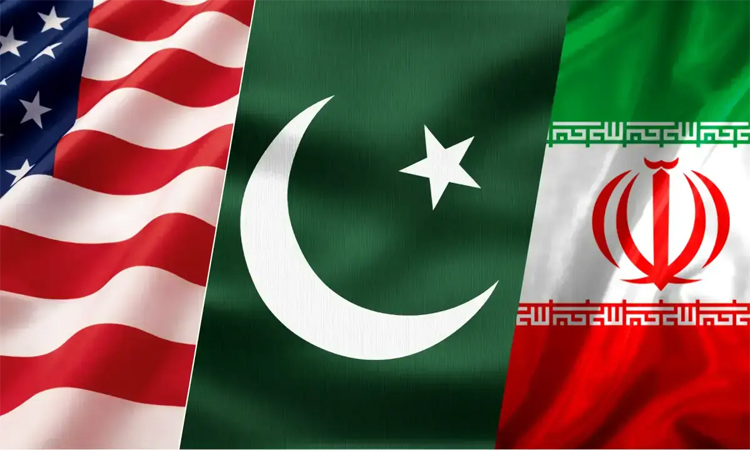
 Iran has asked Pakistan to use diplomacy to reduce regional tensions after Tehran suspended exchanges with the United States in protest over Israel’s widening military operations in Lebanon, officials and Iranian media said on Monday.
The request was conveyed during a telephone call between Iranian Foreign Minister Abbas Araghchi and Deputy Prime Minister and Foreign Minister Ishaq Dar. Araghchi expressed concern over what Tehran called Israeli violations of the Lebanon ceasefire and reported Israeli plans for strikes in parts of Beirut, while praising Pakistan’s constructive role in regional diplomacy and asking Islamabad to continue its good offices for de-escalation.
Dar conveyed Pakistan’s concern and stressed the importance of sustaining the ceasefire to prevent existing understandings from breaking down. Both sides agreed to remain in contact, suggesting Islamabad remains inside the diplomatic loop as the US-Iran track faces its most serious disruption in weeks.
Earlier, Iran’s Tasnim news agency reported that Tehran had halted indirect message exchanges and text-sharing with Washington through mediators until its demands on Lebanon and Gaza were addressed, including an end to Israeli military operations and withdrawal from occupied areas in Lebanon. The immediate trigger was Israeli Prime Minister Benjamin Netanyahu’s order to strike targets in Beirut’s southern Dahieh district, a Hezbollah stronghold.
US President Donald Trump said Iran had not formally informed Washington that it was cutting off talks and remained publicly optimistic, writing on Truth Social that “Iran really wants to make a deal” and urging critics to “sit back and relax”. He later claimed movement on the Lebanon front, saying he had a “very productive” call with Netanyahu and that “there will be no troops going to Beirut”, with any troops already on their way “turned back”.
Trump also said that, through “highly placed representatives”, he had held a “very good call with Hezbollah”, claiming the group had agreed that “all shooting will stop” and that Israel and Hezbollah would not attack each other. There was no comment from either Israel or Hezbollah.
The crisis has raised new concerns over maritime security. Iranian media reported that Iran and allied groups were considering the “activation of other fronts”, including Bab al-Mandeb, the narrow Red Sea passage linking the Arabian Sea to the Suez Canal. Any disruption there, combined with pressure around Hormuz, could affect energy flows, shipping insurance and trade routes.