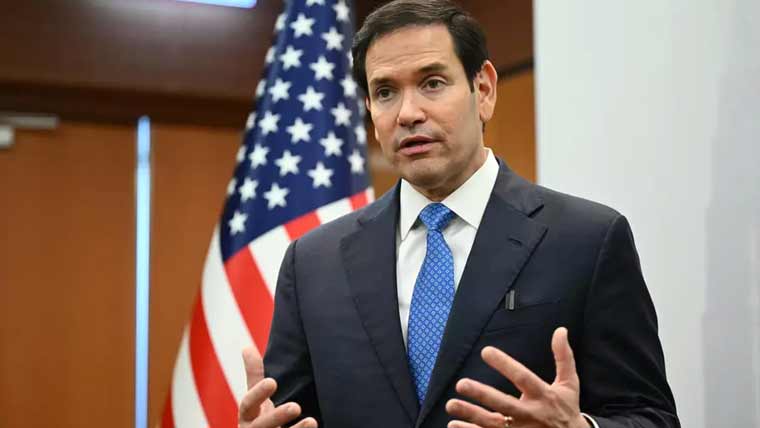
US Secretary of State Marco Rubio has expressed optimism that a diplomatic agreement with Iran could be reached, but stressed that Tehran must significantly scale back its nuclear programme before any sanctions relief can be considered.
Read More: Rubio says Iran response needed today
Speaking before the Senate Foreign Relations Committee on Tuesday, Rubio said negotiations remain active and could produce results in the coming days or weeks. His remarks come as the three-month conflict involving the United States, Israel and Iran remains unresolved, while the closure of the Strait of Hormuz continues to affect global energy markets.
🇺🇸🇮🇷 Sec. Rubio points to what he sees as a major shift from Iran.
“There is the prospect before us… that, for the first time, certainly in my memory, they have agreed to negotiate aspects of their nuclear program that just a month ago, just a year ago, they were refusing to… https://t.co/gjsRc8u2ul
— Mario Nawfal (@MarioNawfal) June 2, 2026
Rubio stated that reopening the strategic waterway is a key requirement for any lasting agreement. He also reiterated Washington’s position that Iran must address concerns over its stockpile of highly enriched uranium and broader nuclear activities.
According to Rubio, sanctions imposed on Iran are directly linked to its nuclear programme. He said meaningful sanctions relief would only follow substantial concessions by Tehran, including restrictions on uranium enrichment and enhanced commitments regarding future nuclear activities.
US President Donald Trump also insisted that communication with Iran remains ongoing despite reports suggesting a pause in talks. In a post on Truth Social, Trump said discussions were continuing and urged Tehran to reach an agreement.
Rubio acknowledged that negotiations may now include aspects of Iran’s nuclear programme that Iranian officials had previously been unwilling to discuss. However, he cautioned that progress in talks does not guarantee a final agreement acceptable to all parties.
The secretary of state further argued that the conflict had weakened Iran’s military capabilities and damaged its economy. He maintained that the war had significantly reduced Tehran’s ability to project power in the region.
Meanwhile, concerns persist over regional tensions. Iran has warned that continued Israeli military operations in Lebanon could jeopardise negotiations with Washington. Iranian Parliament Speaker Mohammad Bagher Ghalibaf said Tehran could halt talks and take a more confrontational stance if Israeli attacks continue.
Read More: Rubio says diplomacy still possible with Iran
The developments highlight the complex challenges facing negotiators as efforts continue to secure a broader agreement aimed at easing regional instability.