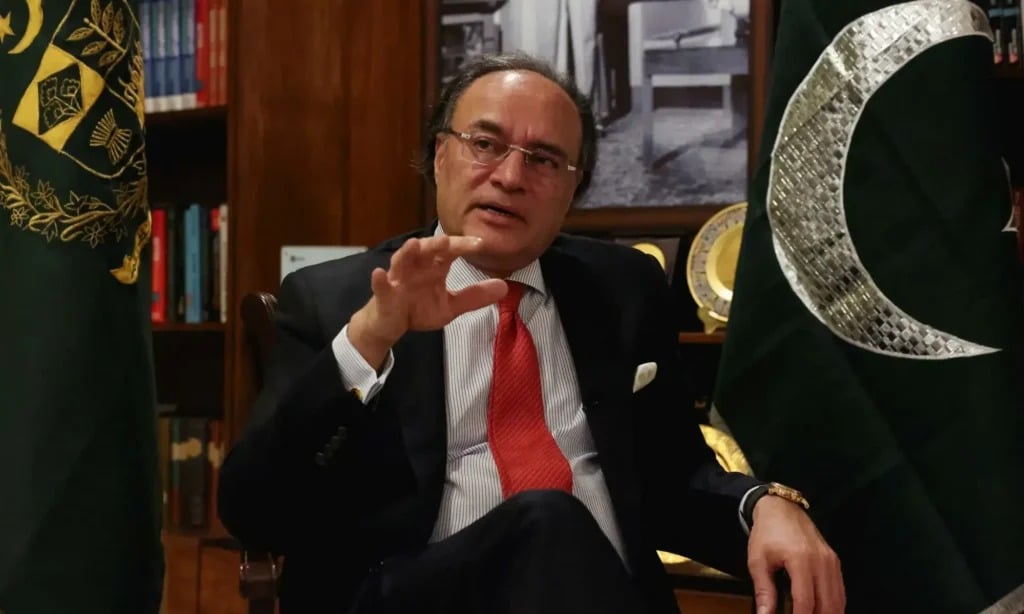
Finance Minister Muhammad Aurangzeb has arrived in Washington for a three-day official visit to advance Pakistan’s economic engagement with the United States through discussions on trade, investment, tariffs and broader financial cooperation. The visit is expected to strengthen bilateral economic relations while exploring new opportunities for commerce and long-term investment between the two countries.
Read more : Finance minister to hold trade talks in Washington
Moreover, Pakistan and the United States will resume negotiations on Monday, with Aurangzeb scheduled to meet officials from the Office of the United States Trade Representative, the US Export-Import Bank, the US International Development Finance Corporation and the International Monetary Fund. The meetings will focus on expanding economic cooperation and identifying areas for deeper institutional collaboration.
Meanwhile, a major priority of the visit will be discussions on a possible bilateral trade agreement aimed at increasing trade volumes and investment flows. Both sides are expected to review tariffs, market access, investment opportunities and other measures that could strengthen commercial relations and create a more favourable environment for businesses in both countries.
Read more : Maryam Aurangzeb reaffirms Pakistan’s Kashmir stance –
Furthermore, meetings with the US Export-Import Bank and the Development Finance Corporation will examine financing opportunities for infrastructure, energy and private-sector projects in Pakistan. The visit also follows progress in tariff negotiations, where an earlier Pakistani delegation secured a reduction in the proposed tariff rate on Pakistani exports from 29 percent to 19 percent.
The talks will also address recent changes in the US tariff framework after a Supreme Court ruling and ongoing trade-related reviews involving Pakistan. In addition, Aurangzeb is expected to highlight Pakistan’s economic reform programme, efforts to maintain macroeconomic stability and plans to attract international investment while returning to global capital markets through future Panda Bond and Eurobond issuances.