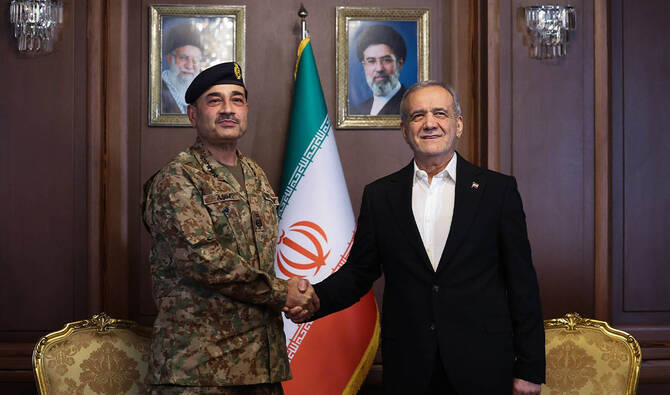
TEHRAN: Asim Munir held a key meeting with Masoud Pezeshkian during his visit to Tehran, in what is being seen as a significant step in ongoing diplomatic efforts involving Iran and the United States.
Read More: Iranian president, army chief discuss regional security in Islamabad
According to media reports, the meeting focused on regional developments and efforts to facilitate dialogue between Tehran and Washington, with Pakistan playing an active mediatory role. The engagement comes amid heightened diplomatic activity aimed at easing tensions and reaching a possible agreement between the two countries.
Pakistan’s army chief and field marshal, Asim Munir, met Iranian President Masoud Pezeshkian in Tehran on Thursday (April 16) as diplomatic efforts intensify to prevent a renewed escalation in the region.
Munir, who arrived in Tehran a day earlier, is playing a key role in… pic.twitter.com/QfivpXJMza
— India Today Global (@ITGGlobal) April 17, 2026
Earlier, Field Marshal Munir had a busy schedule in Tehran, holding multiple high-level meetings. He met with Mohammad Bagher Ghalibaf, who is considered an influential figure in Iran’s political landscape and had previously led a delegation to Islamabad.
The army chief also held talks with Iranian Foreign Minister Abbas Araghchi, discussing bilateral relations and regional security dynamics. These interactions are part of a broader diplomatic initiative to support dialogue and de-escalation in the region.
According to the Inter-Services Public Relations, the visit is linked to Pakistan’s efforts to mediate between Iran and the United States. Interior Minister Mohsin Naqvi accompanied the army chief during the visit.
Iranian media also reported that Munir met with the commander of Khatam al-Anbiya Central Headquarters, further underlining the strategic nature of the discussions.
Read More: Pakistan ramps up mediation to end ME war as army chief lands in Iran
Observers view the visit as part of Pakistan’s expanding diplomatic engagement, as it seeks to play a constructive role in promoting dialogue and stability in the region through high-level contacts and mediation efforts.