 Pakistan is seeking to expand cooperation with Canada on canola cultivation and agricultural technology as it looks to boost domestic oilseed production and reduce an annual edible oil import bill of up to $5 billion, a statement said on Friday.
The push comes as Pakistan, which remains heavily dependent on imported edible oils despite agriculture being a key pillar of its economy, seeks to strengthen food security and improve farm productivity in the face of climate-related challenges, while drawing on Canadian expertise in agricultural research, seed development and modern farming practices.
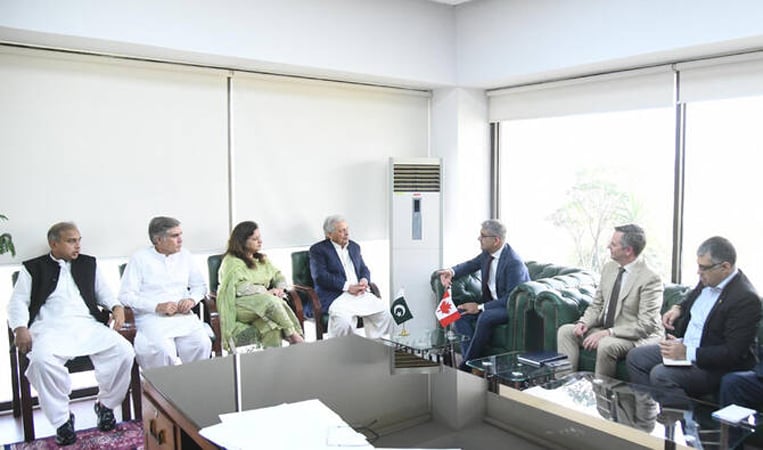
The initiative was discussed during a meeting between Federal Minister for National Food Security and Research Rana Tanveer Hussain and Canadian High Commissioner Tarik Ali Khan in Islamabad, according to Pakistan’s food security ministry. The talks focused on expanding cooperation in agriculture, livestock development, agribusiness investment and trade.
“Pakistan spends nearly 4 to 5 billion US dollars annually on edible oil imports and is actively pursuing policies to boost domestic oilseed production,” Hussain said, according to the statement, adding that Islamabad was interested “in benefiting from Canadian expertise in canola cultivation, seed development, mechanized farming, and agricultural research to reduce the country’s import dependence.”
The minister noted that agriculture contributes about a quarter of Pakistan’s gross domestic product and supports millions of livelihoods, but said the country wanted to learn from Canada’s experience in raising agricultural productivity and developing value-added food industries.
Canada is one of the world’s leading agricultural exporters and the largest producer and exporter of canola, an oilseed crop developed through Canadian research that is widely used for cooking oil and animal feed. Canada is also regarded as a global leader in seed research, farm mechanization and livestock genetics.
Hussain said Pakistan wanted to deepen cooperation in hybrid seed research, livestock breed improvement, embryo transfer technology, feed formulation, dairy and meat processing, packaging technologies and agricultural value chains.
He also highlighted Pakistan’s export potential in products including mangoes, rice, kinnow mandarins, dates and halal meat, saying closer cooperation could help improve market access and create new trade opportunities.
The Canadian envoy said Ottawa was engaging agricultural provinces and industry stakeholders to explore investment opportunities in Pakistan’s agriculture and livestock sectors.
He said Canada’s minister of agriculture was expected to visit Pakistan in July, providing an opportunity to deepen institutional cooperation and examine new avenues for collaboration in agriculture, food security and agribusiness investment.
The two sides also discussed technical cooperation on animal health systems, disease control programs and measures aimed at helping Pakistan meet international standards and access higher-value export markets.