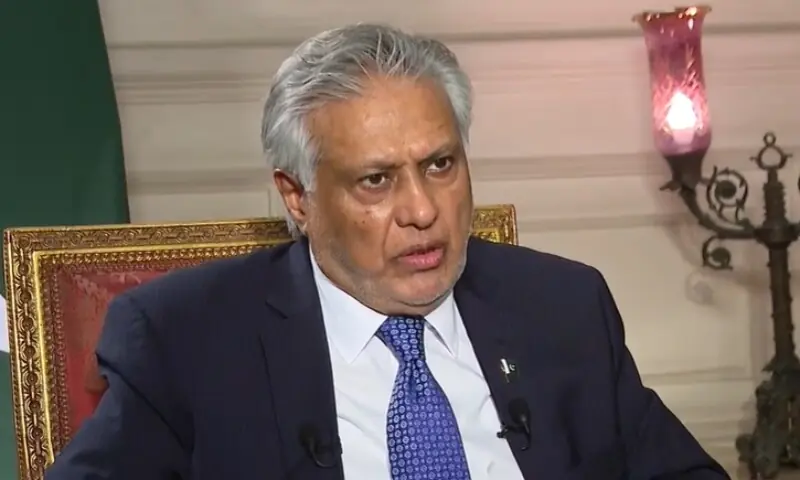
Islamabad: Deputy Prime Minister and Foreign Minister Ishaq Dar has said that recent US-Iran negotiations in Switzerland could have begun earlier had they not been disrupted by Israel’s military actions in Lebanon.
In an interview with Al Arabiya recorded before the latest round of talks, Dar stated that diplomatic efforts were progressing before renewed violence in Lebanon interrupted the process and delayed negotiations.
Highlighting Pakistan’s role in facilitating dialogue, Dar said Islamabad had remained actively engaged since the beginning of efforts to ease tensions between Washington and Tehran. He noted that Pakistan helped facilitate earlier discussions and served as a witness during direct talks between the United States and Iran.
According to Dar, Pakistan continued diplomatic engagement with regional and international partners, including Saudi Arabia, Egypt, Turkiye and Gulf states, to support the peace process. He said these efforts eventually contributed to the signing of the Islamabad Memorandum of Understanding (MoU) on June 18.
Describing the Switzerland meeting as the second phase of negotiations, Dar said discussions were being handled through three technical groups focusing on the nuclear issue, sanctions and frozen assets, and the situation in Lebanon.
He explained that some matters are expected to be concluded within 30 days, while the broader framework for a final agreement has a 60-day timeline that could be extended by mutual consent.
Dar said the positive effects of diplomatic progress were already becoming visible, pointing to lower energy prices and the restoration of shipping activity through the Strait of Hormuz.
He reiterated Pakistan’s position that international waterways should remain open and free for navigation without additional restrictions, fees or tolls. Referring to discussions with China earlier this year, he said both countries had supported unrestricted maritime movement in the strategically important passage.
Addressing concerns about continued instability in Lebanon, Dar acknowledged that the issue had repeatedly complicated negotiations. He urged the international community to use its influence to prevent further escalation and encourage restraint.
On Iran’s uranium stockpile, Dar said Tehran had previously shown flexibility during negotiations and noted that discussions had included options related to reducing uranium enrichment levels through technical processes.
Expressing optimism about the outcome of the negotiations, Dar said Pakistan’s role was driven solely by a desire to promote peace and regional stability. He voiced confidence that continued diplomatic engagement, supported by regional partners and the wider international community, could help the United States and Iran reach a comprehensive agreement.
He also noted that sanctions-related issues remain under discussion and will be addressed alongside nuclear and regional security matters during the ongoing negotiation process.